
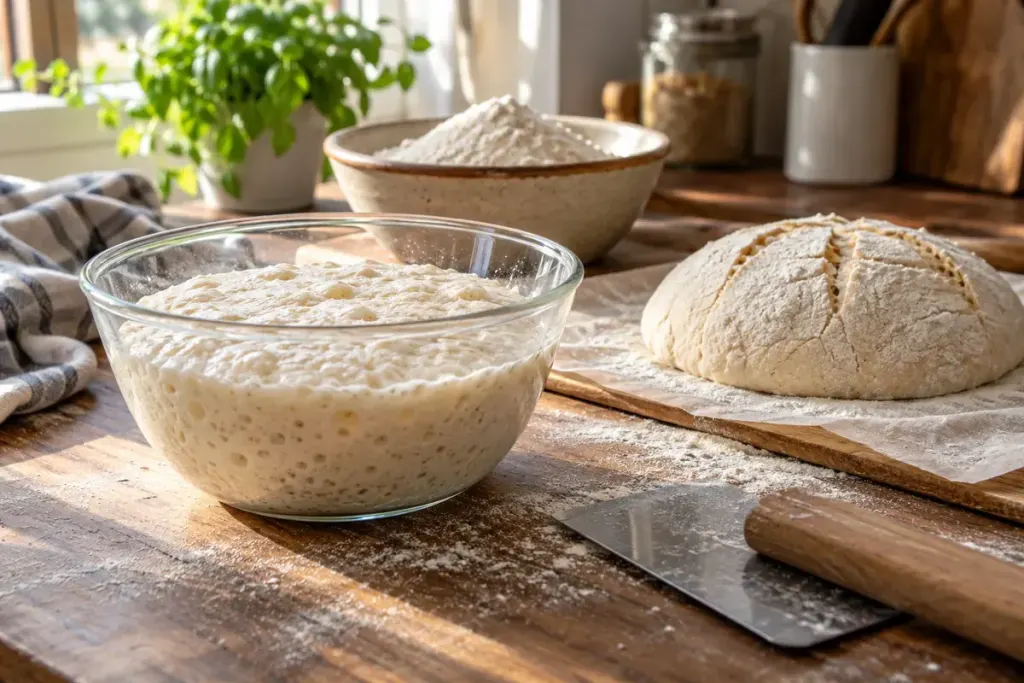
A poolish moves part of bread making into an earlier session. That can make tomorrow’s bake easier, provided the bowl is ready when you are. Setting an alarm without considering the recipe’s yeast quantity and room temperature gives only half a schedule.
King Arthur Baking’s preferment reference describes poolish as equal weights of flour and water with a small quantity of yeast. It also explains that yeast quantity and ripening time belong together. An overnight poolish is not simply an ordinary dough left on the counter for longer.
Account for the flour twice on paper, once in the bowl
Write two ingredient columns: what goes into the preferment and what is added at final mixing. Suppose an illustrative formula has 500 grams of total flour, with 100 grams assigned to the poolish. The final dough receives the remaining 400 grams, not another 500. Treat the water in the same way.
Use a complete recipe for the actual yeast quantity, temperatures and timings. The numbers above explain ingredient accounting; they are not a finished bread formula.
Look for activity rather than a particular clock time
A ripe poolish has developed fermentation bubbles and risen. A bowl that still looks like freshly mixed flour and water deserves investigation. Marking the starting level on a straight-sided container makes that change easier to see. Leave enough headroom for expansion and cover the container as the recipe directs.
Do not taste raw flour mixtures to assess them. Observe the surface, rise and aroma instead. If your kitchen is substantially warmer or colder than the recipe’s conditions, record that difference before deciding the recipe has failed.
Finally, reserve time after mixing for bulk fermentation, shaping, proofing, baking and cooling. Poolish contributes to the dough; it does not remove the later stages. A useful first-bake note records when the preferment looked ready, so the next schedule can reflect your kitchen rather than an imagined one.