
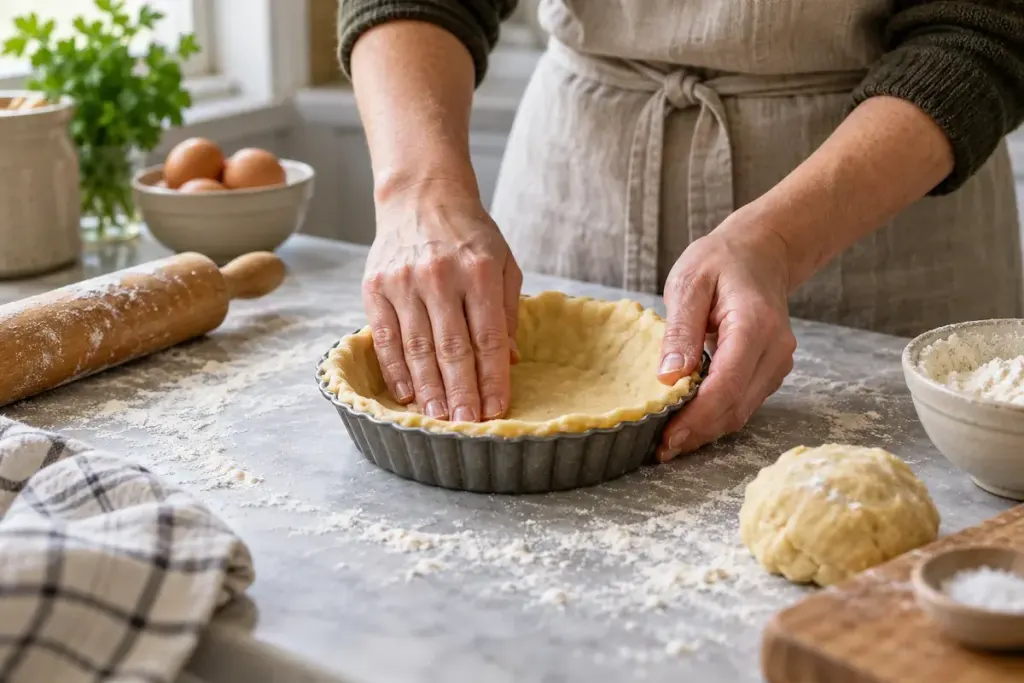
With many pastries, the instruction is to keep everything cold. Hot-water crust asks for a different rhythm. Warm liquid and fat are worked into flour, and the resulting dough is shaped while it remains pliable. Leaving it on the bench while you search for the tin can turn an easy job into a cracked edge.
The King Arthur hot-water crust recipe provides a tested starting formula. Follow one complete recipe for quantities, handling and baking; do not combine its method with an unrelated shortcrust ratio.
Set up before mixing
- Prepare the specified tin or mould and clear enough space to work.
- Have the filling ready in the condition the recipe requires.
- Set aside the tools for trimming, sealing and moving the finished pie.
Warm does not mean safe to handle immediately. Allow the freshly mixed dough to reach a comfortable working temperature according to the recipe. A small piece is useful for judging how it bends without committing the whole batch.
Look for even walls
When pressing dough into a tin, check the corners as well as the rim. A thick lump at the base can hide behind a neat upper edge. Work gradually around the mould and compare thickness with your fingertips rather than stretching one thin patch to cover a large gap.
Keep unused dough covered so its surface does not dry while you work. If it becomes difficult to shape, return to the recipe’s handling advice instead of adding an unmeasured splash of water.
The aim is a continuous shell with a sound seal, not maximum speed. Judge the finished pie using the recipe’s baking and food-safety instructions, especially when the filling contains meat. A browned crust alone cannot confirm that every part of the filling has cooked properly.