
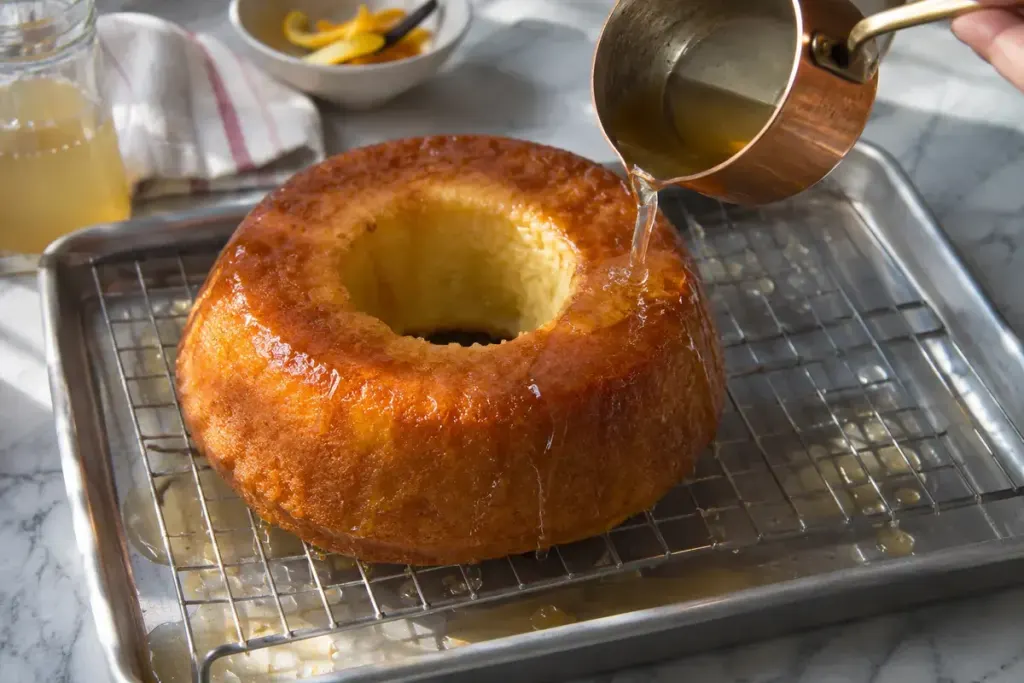
A savarin can look like a simple ring cake until the syrup arrives. Its character comes from two stages working together: an enriched, yeast-raised cake, followed by a deliberate soaking. Leaving out the second stage changes the dessert rather than merely making it less sweet.
For a complete formula, King Arthur Baking’s yeasted lemon cake is one documented example. It uses a ring pan and a lemon syrup, with the syrup applied in stages after baking. Other savarin recipes use different flavours and procedures, so choose one coherent recipe before starting.
Think in stages rather than one oven timer
Read through the rise, bake, soak and cooling instructions together. A cake that needs a yeast rise cannot be scheduled like a quick batter mixed immediately before dinner. Equally, the moment it leaves the oven may be the beginning of the finishing work, not the time to clear the kitchen.
Make a short timetable backwards from serving. Allow space for the recipe’s rise and cooling, and keep the finishing window free. Exact timing depends on the recipe and conditions; the point of the timetable is to avoid discovering that guests arrive during the soaking stage.
Prepare the syrup station before the cake comes out
- Have the specified syrup ready at the stage the recipe requires.
- Choose a rack, tray or serving plate that suits the instructed method and catches drips.
- Set out the brush or other utensil named in the recipe.
- Plan the unmoulding movement, including safe handling of the hot pan.
Do not judge the finish from the first wet-looking patch. Apply the measured syrup by the chosen method and allow the stated time before deciding how the cake has absorbed it. Adding an unmeasured extra jug because the surface briefly looks dry makes the result harder to understand next time.
When serving, cut a portion that shows the crumb as well as the ring’s shape. Note whether your own result feels evenly moistened or has a noticeably different centre. Keep that observation with the recipe, pan size and any deliberate changes. That is more useful than recording only “good cake”: it tells you which stage to examine on the next bake.