
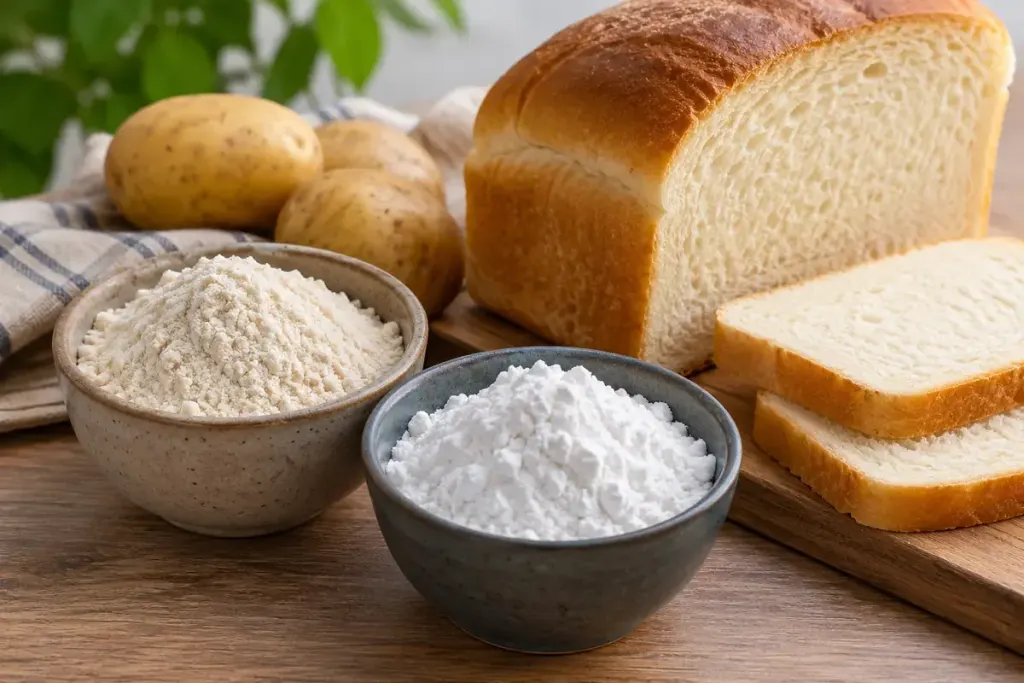
You are ready to mix a soft sandwich loaf, and the recipe asks for potato flour. The packet in the cupboard says potato starch. Both come from potatoes, but treating the names as interchangeable skips a useful ingredient check.
King Arthur Baking’s substitution guide explains the distinction: potato flour is made from cooked, dried whole peeled potatoes, while potato starch is separated from crushed potatoes. Flour therefore brings more than the isolated starch, including a little colour and potato flavour. The starch component helps retain moisture, which is one reason potato ingredients appear in bread formulas.
Read the ingredient, then the amount
Check both the product name and ingredient list. A bag described as a potato-based flour blend may contain other ingredients. Instant mashed-potato flakes are another product again; seasoning, milk ingredients or added fat would matter in a recipe that expects plain potato flour.
Next, notice how much the recipe uses. A small addition to wheat flour serves a different purpose from replacing the main flour in a loaf. Potato starch does not supply the gluten structure of bread flour, so the idea “both are white powders” is not a useful replacement rule.
Make one deliberate substitution
If your recipe’s author provides a tested alternative, follow that quantity and any liquid adjustment together. Do not change the potato ingredient, yeast amount and proofing method in the same attempt. Otherwise, a tighter crumb or a stickier dough leaves you with several possible explanations.
A simple baking note is enough: record the exact packet name, amount used, any liquid held back and how the cooled loaf sliced. Those observations describe your own bake; they do not prove that one ingredient is always better. Let the bread cool before judging its texture, and compare like with like on the next batch.
For a first attempt at a recipe, buying the specified ingredient is often the easiest way to learn the intended dough. Substitution becomes more useful once you know what you are trying to preserve: tenderness, flavour, moisture or ease of handling.