
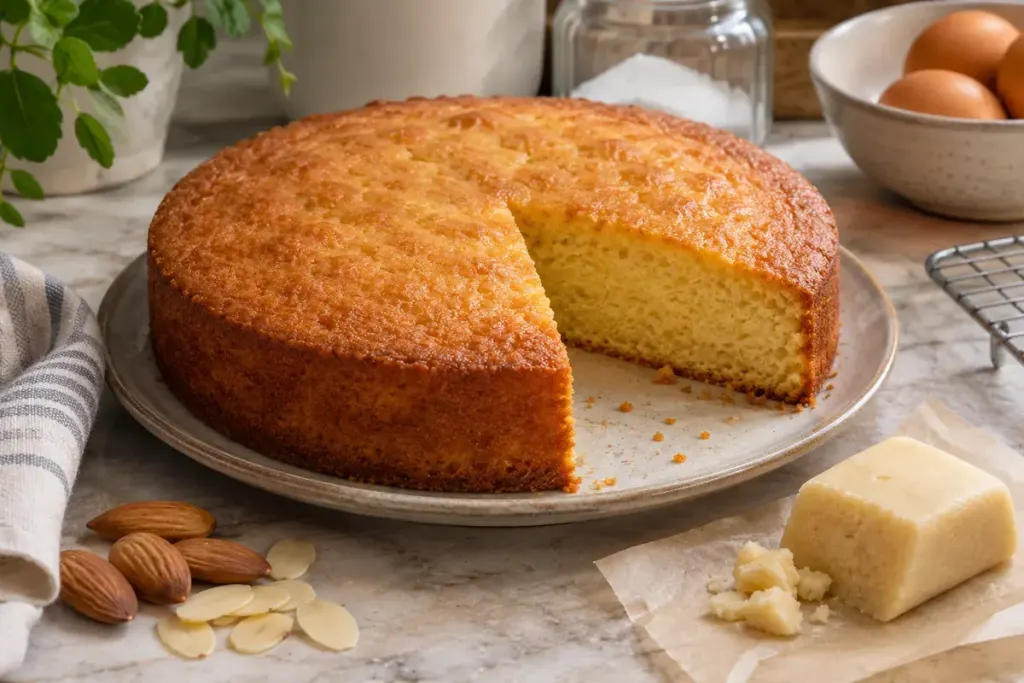
The name suggests bread, but pain de Gênes belongs on the cake plate. Its almond character begins with a prepared paste, and that choice matters before the mixer is switched on. A bag of ground almonds is not a direct replacement for a paste that already combines ingredients in a particular proportion.
Valrhona’s pain de Gênes formula is a useful starting point: it specifies almond paste, eggs, melted butter, a relatively small quantity of flour and baking powder. Follow the full formula for quantities and baking guidance; the notes here explain what to organise around it.
Check the paste before measuring the rest
Read the almond percentage and ingredients on the pack. Products sold as almond paste, marzipan or almond filling can differ in sugar content and texture. A name on the shelf does not establish that a substitution will behave the same way.
Keep a photograph of the pack beside your recipe note. If the first cake turns out well, that small record is more useful than remembering only that you used “some almond paste”. It also makes a later change of brand easier to evaluate.
Prepare the mould and weigh the remaining ingredients first. Once the mixture has been aerated, searching for parchment or a missing tin interrupts the sequence at an awkward moment.
Watch the mixture as it becomes lighter
In Valrhona’s method, eggs gradually loosen the paste before the mixture is beaten to a ribbon. Part of that mixture is combined with melted butter before being returned to the bowl, and the sifted dry ingredients are folded in gently. The order gives each addition a defined place rather than asking one hurried stir to do everything.
For your own bake, record the mould dimensions, filled depth and oven setting used with the chosen recipe. A shallow layer intended for an assembled dessert is not a reliable timing guide for a much deeper cake.
Let the finished cake cool as the recipe directs before judging the crumb. Serve a first slice simply, so you can notice the almond flavour and texture before adding a filling or topping. If you want to change the result next time, change one element and keep the rest of the record intact.