
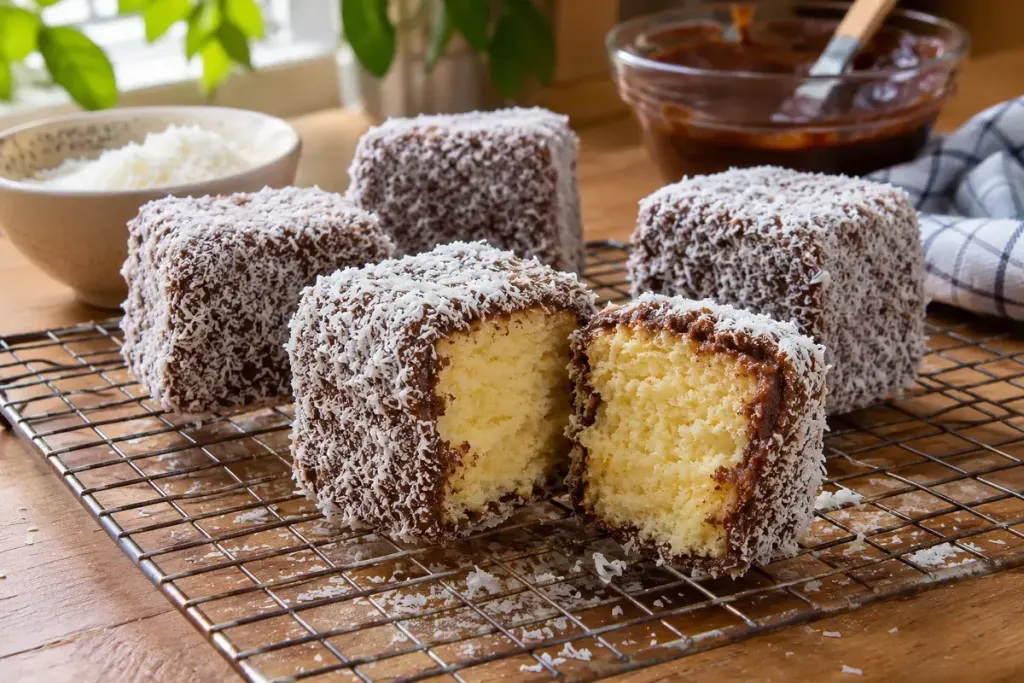
The first lamington often tells you more than the whole tray. If its edges crumble into the chocolate or its coconut coat slides off, pause before dipping the next piece. The sponge, coating and handling method need to work together.
A lamington combines cake with an outer coating and coconut. There are many versions, including filled cakes and individual squares. Australian Eggs’ lamington-cake method cools the sponge before coating it and gives the coconut a separate tray. Those are useful preparation decisions even when your chosen recipe has a different flavour or shape.
Give the coating a clean route
Set out the cut cake, the icing bowl, a shallow coconut dish and a rack over a tray. Put them in the order you will use them. Leave enough space to turn a piece without carrying it over the remaining plain cake. A fork or suitable dipping tool should support the sponge rather than squeeze it.
Test one piece. Look for a coat that reaches the corners and sheds its excess before the coconut goes on. If the sponge is collapsing, consider its temperature and the recipe’s intended texture before changing the icing. If the icing is difficult to spread, check its preparation instructions instead of immediately pouring in extra liquid.
Different recipes deliberately use different degrees of firmness. In Kirsten Tibballs’ larger lamington cake, the sponge is handled while frozen during part of the assembly. That is a recipe-specific method, not a requirement to freeze every lamington.
Keep a little clean coconut aside. Once the first portion becomes heavily mixed with chocolate, a fresh portion makes it easier to finish the last pieces neatly. Let the coating settle before packing the cakes close together.
For a first attempt, use a complete, tested recipe for the cake and icing quantities. This handling guide is not a substitute formula. Note which sponge you used, whether it was chilled and how the test piece behaved; those three details make the next batch easier to adjust. Filled versions containing cream also need the storage arrangements specified by their recipe.