
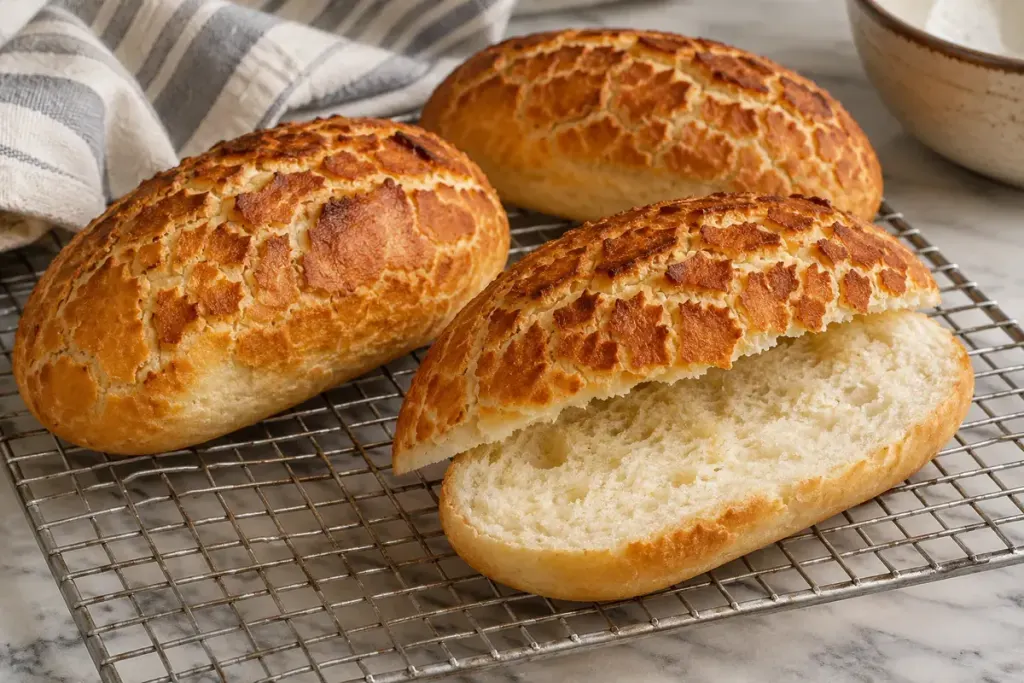
A Dutch crunch roll has two very different textures: a soft interior and a brittle, mottled cap. That patterned surface is not cut into the dough with a blade. It comes from a separate topping applied before baking.
In King Arthur Baking’s Dutch crunch rolls, a rice-flour mixture containing water, yeast, sugar, oil and salt is spread over the shaped rolls during their final rise. The coating sets and cracks as the bread expands in the oven. The recipe is also a useful starting point for the bread often called tiger bread.
Give the topping its own place in the workflow
Read the dough and topping sections separately before weighing anything. The topping is not a flour dusting, an egg wash or an ingredient to knead into the bread. Set out a small bowl and spreading tool beside the tray so that this step does not become a last-minute improvisation.
The linked recipe describes a thick but spreadable consistency and gives its own adjustment guidance. Follow that formula for your first attempt rather than borrowing a paste from a different loaf and keeping the original timing unchanged.
Study the surface as well as the crumb
Once the rolls have cooled, place one uncut roll beside a cross-section. Look at the coverage on top, the transition around the sides and the bread underneath. A striking crust photograph alone will not tell you whether you like the whole sandwich roll.
For a useful bake note, record how easily the paste spread, whether coverage was even, and what happened when you sliced the cooled roll. Photograph the top from the same angle next time. These observations give you something more specific to compare than “the pattern looked different”.
If you experiment later, keep the dough formula, roll size and oven arrangement consistent while changing one topping variable. Treat the result as a small kitchen trial, not proof of a universal rule. Dutch crunch is rewarding precisely because the surface offers a visible record of a separate stage in bread making.