
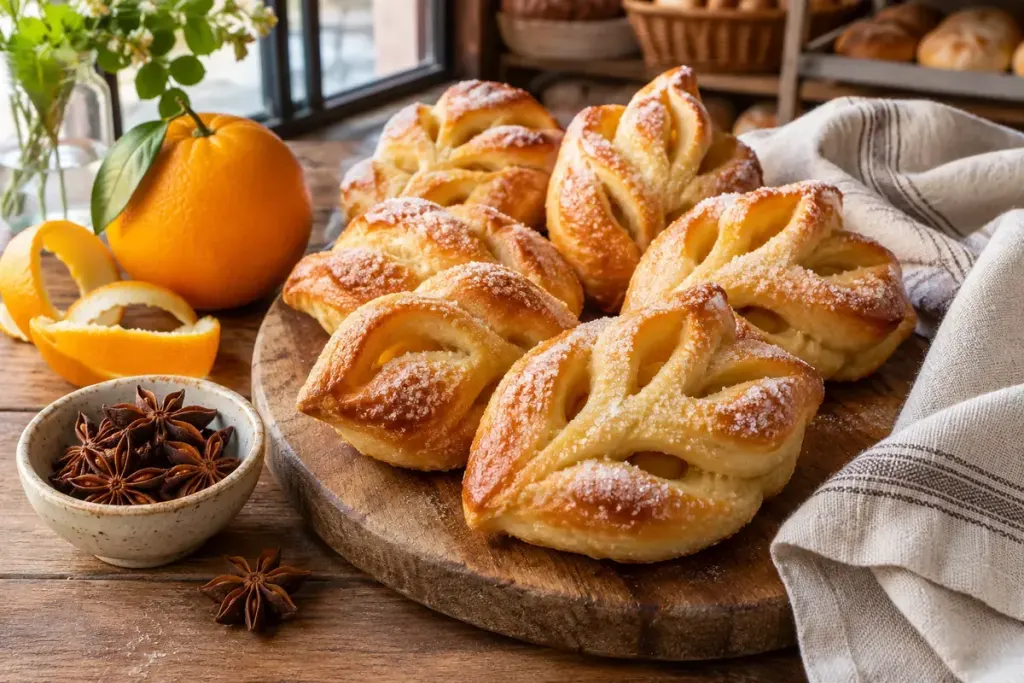
Gibassier is the sort of breakfast bread that announces itself before the first bite: anise, citrus and a sugared surface give the small loaf a particular character. It is worth approaching as an enriched yeast dough with its own shaping routine, rather than expecting it to behave like a plain dinner roll.
The King Arthur Baking authors’ published gibassier recipe provides one complete formula and method. Follow a single tested version through the first attempt. Mixing the liquid quantities from one recipe with the shaping and oven schedule from another makes it harder to understand the result.
Make the shape before the final rise
Different presentations exist, so the name alone does not give you a cutting template. Read the whole shaping instruction before dividing the dough. Keep portions even enough to finish baking together, and leave room on the tray for expansion.
If your chosen version uses openings in the dough, make those openings deliberately. A tiny slit can close as the bread rises. Pulling roughly after the final proof, however, can damage the airy structure you have just waited to build. Use a spare piece to practise the hand movement before shaping the main batch.
Give the fragrance a clear role
Orange-flower water, candied orange and orange zest are not interchangeable measures of the same ingredient. They contribute different amounts of liquid, bitterness, sweetness and aroma. Likewise, anise seed offers a different texture from a ground spice or an extract. Check the ingredient names and measure the specified form.
Prepare any butter and sugar finish before the tray comes out. That makes the final step calm rather than a search for bowls while the bread cools. Let the recipe decide when to apply it; a coating that adheres to a warm surface may behave differently once the crust is cold.
For a first-bake note, record the dough’s feel, proofing appearance and crust colour. Those observations are more useful than deciding immediately to add more flour. Taste a piece after it has settled enough to reveal its crumb, and keep the next change small enough to learn from.