
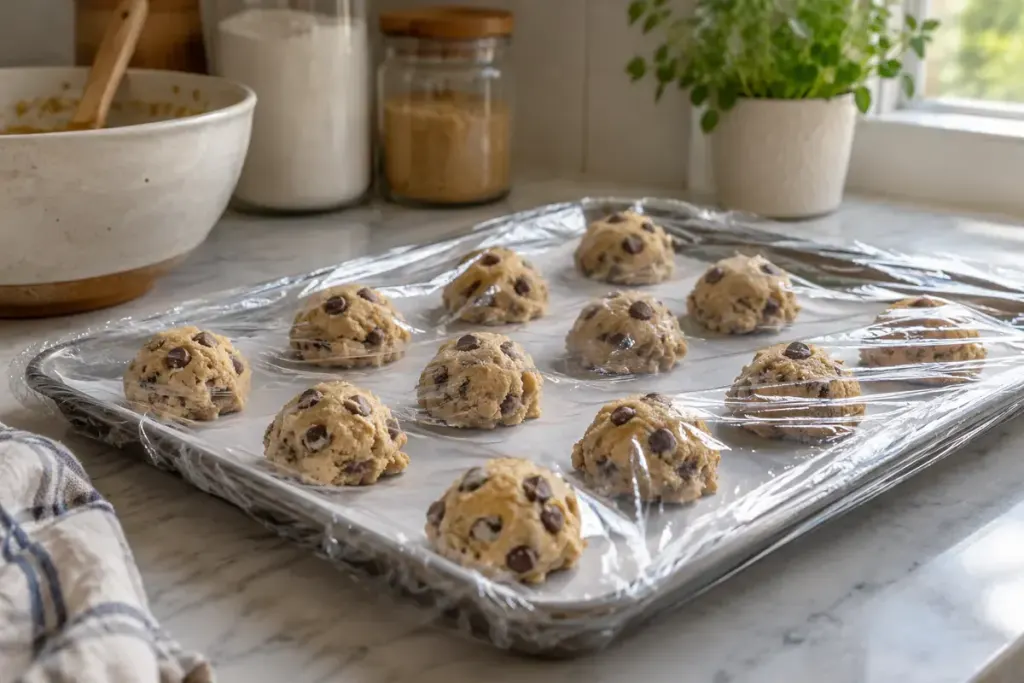
The instruction to chill cookie dough often arrives just when you are ready to bake. Treating it as part of the recipe from the beginning makes the wait easier to use—and helps you avoid comparing two trays that started in very different conditions.
King Arthur Baking’s cookie-dough experiment found changes in spread, colour and flavour after chilling. Cooling also firms the fat. That does not establish one ideal resting time for every cookie: the recipe, fat, flour and intended texture still matter.
Choose the point at which you portion
Read whether the recipe asks for a chilled bowl of dough, chilled portions or a shaped log. A very firm block can be difficult to scoop evenly. Where the recipe permits it, portioning first makes the later tray easier to organise. Keep the pieces covered so the surface does not dry unnecessarily, and label the container with the recipe and preparation time.
Think through the practical sequence. If guests arrive at four, “twenty minutes to bake” is incomplete: mixing, resting, loading trays and cooling all occupy time. Work backwards from the serving time, leaving the chill in the plan rather than hoping a freezer will reproduce it in a few minutes.
Keep the starting conditions comparable
When the first tray goes into the oven, store the remaining dough as directed. A second tray left in a hot kitchen may spread differently even though both came from the same bowl. Record the condition of the portions as well as their size.
Use the recipe’s food-storage guidance; a published experiment is not permission to keep every raw dough for the same extended period. Do not taste dough containing raw flour or ordinary raw egg. The useful result is a repeatable preparation routine, not simply the longest possible rest.