
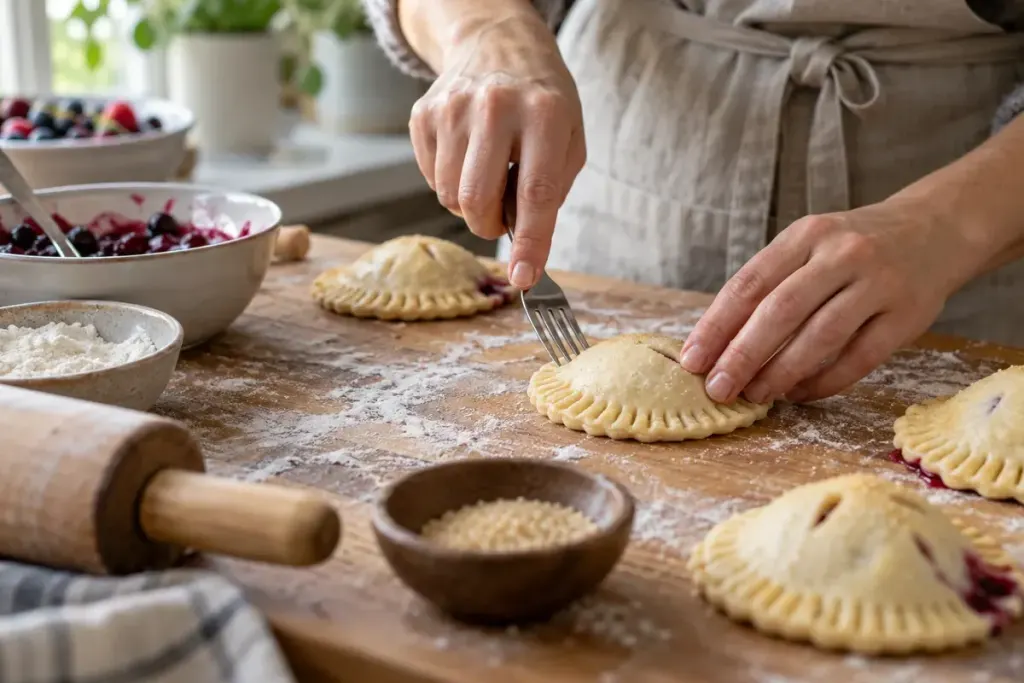
A fork can make a beautiful border around a hand pie without creating a reliable seal. If fruit filling sits between the layers, the decorative marks may simply press pastry against jam. Start with a clean edge before thinking about the pattern.
Leave space for the join
Follow a tested hand-pie recipe for the dough, filling and portion size. Place the filling in the intended area and keep the sealing border clear. Too much filling makes the top stretch and pushes liquid toward the join as you close it.
Use the filling at the condition specified by the recipe. A hot mixture can change the handling of a dough intended to remain cool. A very wet filling may also need a different preparation from the one used in a large pie.
Close without pulling
Bring the top or folded half into place gently. Support it as you align the edges rather than stretching one side to reach the other. If the dough resists or becomes difficult to handle, follow the recipe’s resting or chilling instruction instead of forcing it.
Use the specified sealing liquid, if any, sparingly. Press the border together, then crimp with a fork or the recommended technique. Keep the pressure on the joining area; puncturing the filled centre is a different action from sealing the edge.
Inspect before baking
Look around the whole pie for a gap or filling squeezed into the seam. Make any vents required by the recipe, transfer with support and follow its baking instructions. A neat crimp does not replace the correct dough thickness, filling preparation or oven conditions.
If a pie leaks, note where it opened. A split across the top suggests a different question from a separated edge. Photograph the unbaked shape and finished result for your own comparison. On the next batch, correct one observed issue rather than adding more fork marks to every border.