
A flat cake often sends a baker straight back to the recipe. Before changing the flour or adding another egg, check the small container that supplied the lift. Baking powder loses usefulness with age and poor storage, and its printed date is not the only clue.
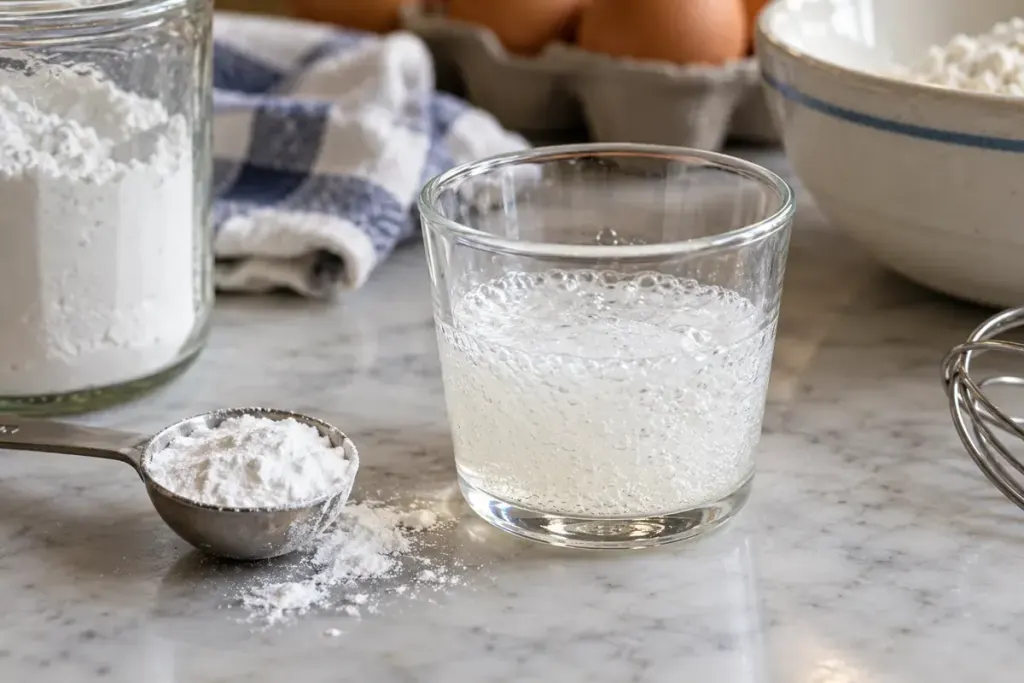
King Arthur Baking’s freshness guide describes testing baking powder in hot water and looking for a lively bubbling reaction. Use a small sample in a clean heat-safe cup, following the guide. Test away from your batter: the wet sample has already started reacting and should not go back into the recipe or container.
Keep baking soda out of this comparison
Baking powder and baking soda are not interchangeable tests. Baking soda needs an acid for the corresponding freshness check. A quiet cup of plain water with baking soda does not prove that the soda has failed. Read the container twice before deciding that your leavener belongs in the bin.
For a useful kitchen diagnosis, write down three things beside the failed recipe: which product you used, when the container was opened, and what the test looked like. “A few slow bubbles” is more informative than “probably fine.” If the reaction is doubtful, a fresh container removes one uncertainty from the next bake.
Then change only one variable. Replacing the leavener while also changing the pan, flour, and baking time makes the result difficult to interpret. A fresh, active powder cannot correct a badly measured recipe, an unsuitable substitution, or an oven that never reached the intended temperature.
Store the replacement tightly closed in a dry place. Use a dry measuring spoon and avoid holding the open container over a steaming bowl. Marking the opening date takes seconds and gives your next troubleshooting session a better starting point than memory.