
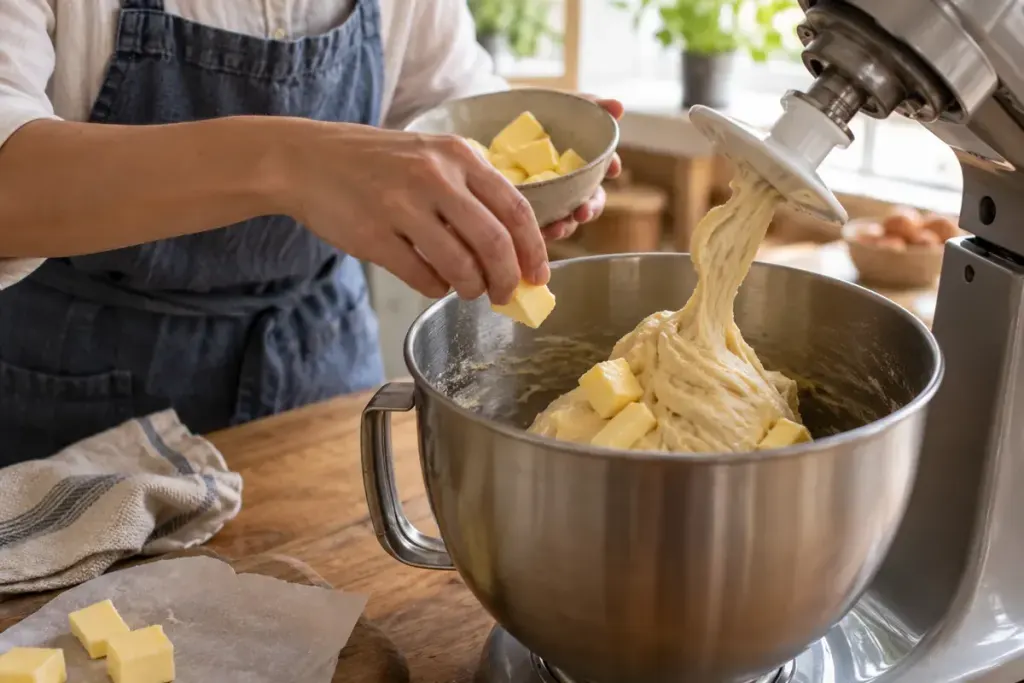
Brioche can look least convincing halfway through mixing. Butter smears around the bowl, the dough appears to separate, and adding flour starts to feel like a rescue. Before changing the formula, check which stage you have reached.
In the staged method used in King Arthur’s classic brioche recipe, the dough is developed before butter is added in small portions. Each portion is allowed to incorporate before the next arrives. This is a method for that recipe, not a rule that every enriched dough must follow.
Soft enough to bend, not a puddle
Butter condition matters alongside quantity. King Arthur’s brioche tutorial describes pliable, cool butter and the risk of mixing heat making an already warm dough greasy. Hard chunks can be difficult to incorporate; melted butter behaves differently again.
Read the full recipe before bringing ingredients to the counter. Some formulas deliberately begin with cold ingredients because their mixing process creates substantial heat. Swapping in the temperature specified by a different recipe can defeat that plan.
Watch the transition
A useful mixing note records three observations: what the dough looked like before butter, how it behaved while butter was being added, and whether it became cohesive again. That tells you more on a second attempt than writing only “mixed for twelve minutes”. Bowl size, batch size and mixer design can all change what a minute of mixing accomplishes.
Keep the machine within its manufacturer’s speed and capacity instructions. Stop it before scraping the bowl or checking dough by hand. If the dough becomes notably warm or the machine struggles, pause and consult the recipe’s troubleshooting guidance rather than forcing the next addition.
Adding handfuls of flour to make rich dough feel like a lean bread dough changes the ingredient balance. Likewise, skipping the specified chill because the dough is difficult to shape can make the next stage harder. Rich dough often becomes more manageable once its butter firms in the refrigerator.
The goal is not to make the messy stage disappear instantly. It is to recognise it, keep temperature and additions under control, and reach the texture your particular recipe describes.