
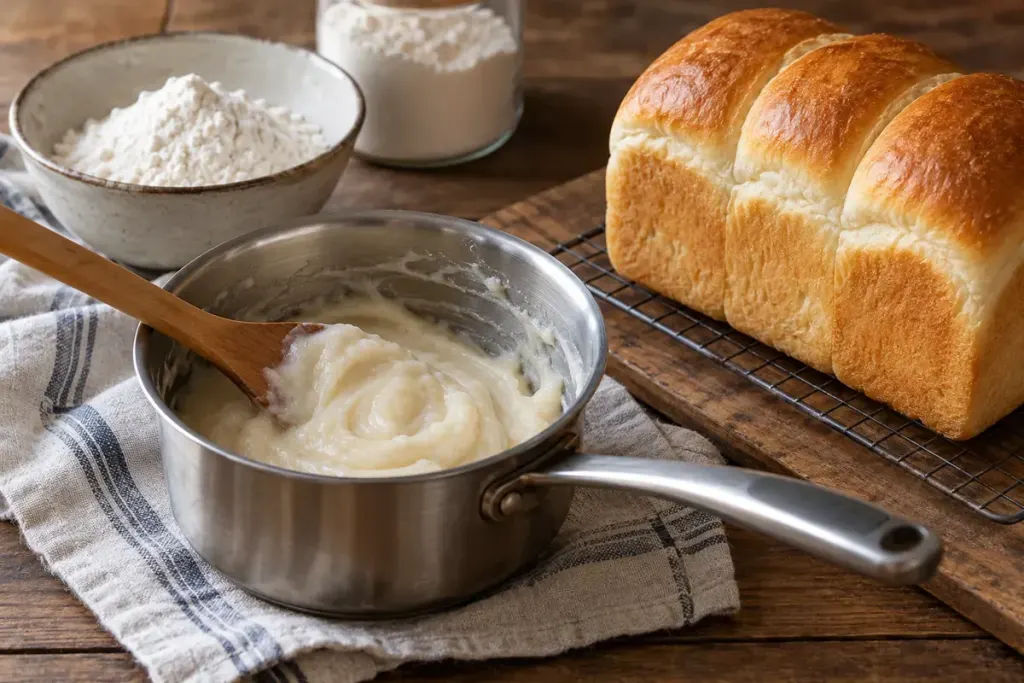
The small saucepan beside a bread recipe can look like an unnecessary extra step. In tangzhong baking, it holds a portion of the recipe’s flour and liquid that is cooked into a paste before being incorporated into the dough. The point is a softer bread that retains moisture, rather than a separate sauce or filling.
King Arthur Baking’s introduction to using tangzhong explains how the cooked starch changes water absorption. Its cinnamon-roll discussion also gives a useful example of applying the method to enriched dough. For a first attempt, follow a tested tangzhong formula instead of adding an arbitrary paste to your usual loaf.
Keep the saucepan inside the recipe’s arithmetic
Measure the paste ingredients separately and label the remaining flour and liquid for the main dough. If the recipe allocates some milk to the saucepan, that milk should not accidentally be added a second time at the mixing stage. This is an easy mistake when reading a split ingredient list from a phone.
Stir while heating, following the recipe’s temperature or consistency cue. Scrape the finished paste into a shallow container if instructed to cool it. Check the specified cooling stage before adding it to the yeast mixture; a paste that has only stopped visibly steaming may still be hotter than expected.
During mixing, resist correcting every trace of stickiness with more flour. First give the dough the kneading or resting time the formula specifies. Extra flour changes the balance you just measured and can make comparison with the intended result difficult.
A useful baking note records the paste’s texture, the dough’s handling and the crumb after cooling. Keep a second observation for the next day, stored in the same way as your usual bread. You will learn more from that controlled comparison than from judging softness while both loaves are still warm. Tangzhong is a method to evaluate, not a promise that every dough will behave identically.