
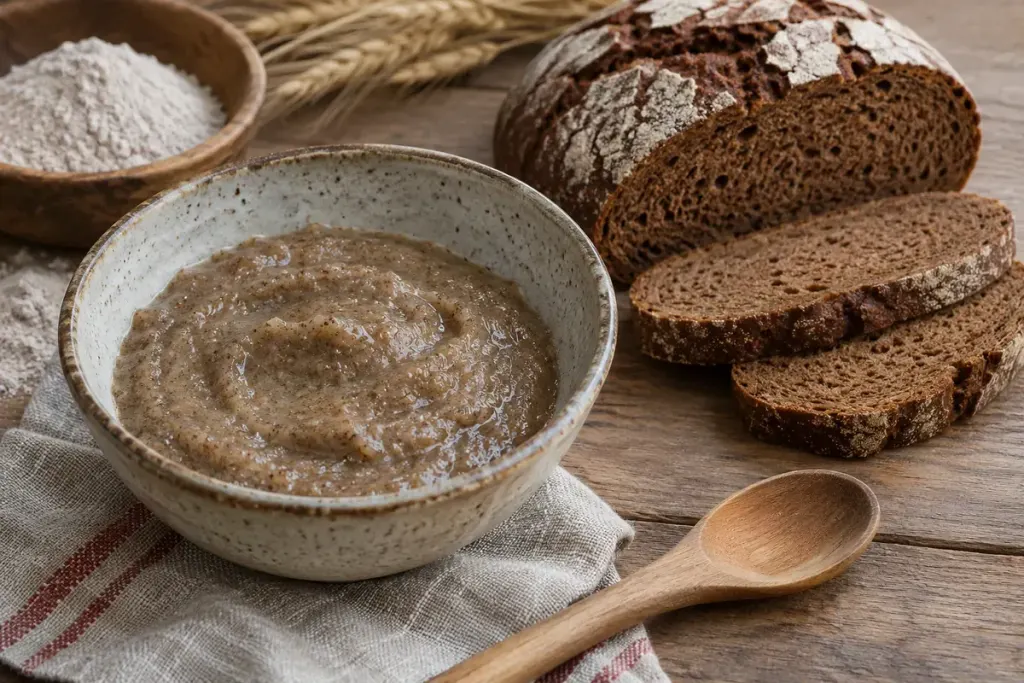
A rye recipe can begin with something that looks more like porridge than bread dough. Flour meets very hot water, thickens, and rests before it joins the other ingredients. This scald is a deliberately prepared component of the loaf.
It is tempting to treat that stage as a convenient way to warm the mixing water. Doing so misses why the recipe specifies a particular flour, water quantity, temperature and resting period.
Texture and flavour start before fermentation
In his explanation of rye scalds, baker Stanley Ginsberg distinguishes changes in texture from changes involving the grain’s enzymes. Heat and water affect starch, while the temperature and duration of a wholegrain scald can influence the conversion of starch into sugars. Different scald schedules therefore need not produce the same result.
A scald is also not automatically a sourdough starter. Some recipes later ferment a cooled scald or combine it with a levain; those are additional stages. Putting a starter into a mixture that is still too hot can damage the organisms the next stage depends on.
Make the first attempt easy to compare
Choose a complete rye recipe that already includes a scald rather than adding boiling water to an unrelated formula. Before starting, draw three boxes on your recipe sheet: scald ingredients, any later preferment ingredients, and final-dough ingredients. This simple separation prevents counting the scald’s flour and water twice.
- Weigh each stage into its own container and label it.
- Record the mixed scald’s temperature, not only the temperature of the water before pouring.
- Follow the specified holding and cooling instructions.
- Note the final dough’s feel and the loaf’s crumb after the recipe’s recommended cooling time.
On the next bake, change one variable only if you can explain what you want to learn. A different rye extraction, a shorter hold and extra water introduced together make a surprising loaf difficult to interpret.
The useful result is more than a sweeter or softer slice. It is knowing which stage produced the change. Once your notes distinguish the scald from fermentation and final mixing, a multi-stage rye bread becomes a sequence you can understand rather than a collection of mysterious waiting periods.