
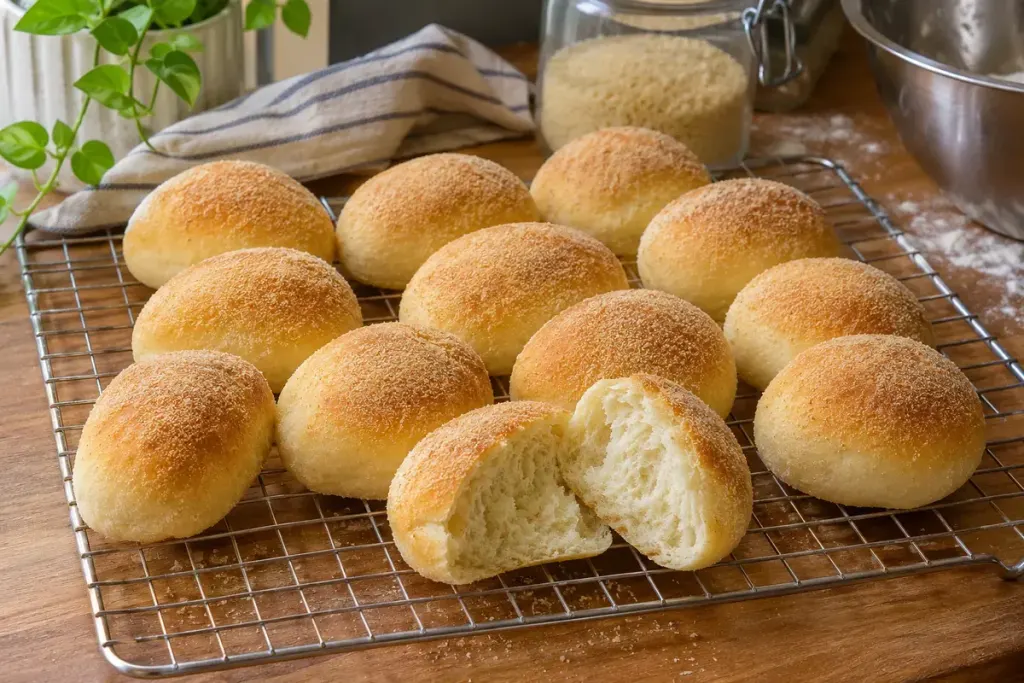
A tray of pandesal has a finish that ordinary dinner rolls do not: a fine, sandy coating of breadcrumbs. It is easy to mistake that surface for flour until a warm roll is picked up and the small toasted crumbs meet the fingers.
In Hannah Dela Cruz’s sourdough pandesal recipe for King Arthur Baking, the divided dough pieces are coated before their final rise. The recipe uses fine dry breadcrumbs and an active sourdough starter. Follow its full formula and fermentation guidance; a coating technique cannot compensate for dough that has not developed properly.
Set up the coating before dividing the dough
Give the crumbs their own small bowl. Put the prepared tray alongside it and leave a clear place for the dough. This arrangement means each portion can move from shaping to coating to tray without being carried across a flour-covered work surface.
For a first attempt, inspect the crumbs before starting. Large irregular flakes and fine crumbs will not create the same-looking finish. Check the packet for seasoning and allergens as well as texture. A breadcrumb product meant for a savoury coating may bring flavours you never intended to add to breakfast bread.
Keep the coating operation gentle. Pressing hard enough to flatten a portion changes more than the surface. Once a piece is coated and placed, avoid repeatedly picking it up to improve its appearance. Use the source recipe’s spacing and final-rise directions rather than arranging the rolls solely for a photograph.
Record the detail you want to repeat
A useful baking note can be very small: breadcrumb brand or homemade source, whether the crumbs were fine or coarse, and a photograph of the rolls before baking. After cooling, compare coverage on the top and sides. Was the finish even, patchy or heavier than you liked?
If you try another batch, change the crumb preparation while keeping the dough formula and portion size consistent. That makes your comparison easier to interpret. Changing the flour, fermentation and coating together leaves too many possible explanations for a different result.
Serve the rolls in a way that lets their texture stand out. Split one, notice the contrast between soft interior and crumb-coated exterior, and decide on fillings afterwards. That small surface step is part of pandesal’s character, rather than decoration added at the end.