
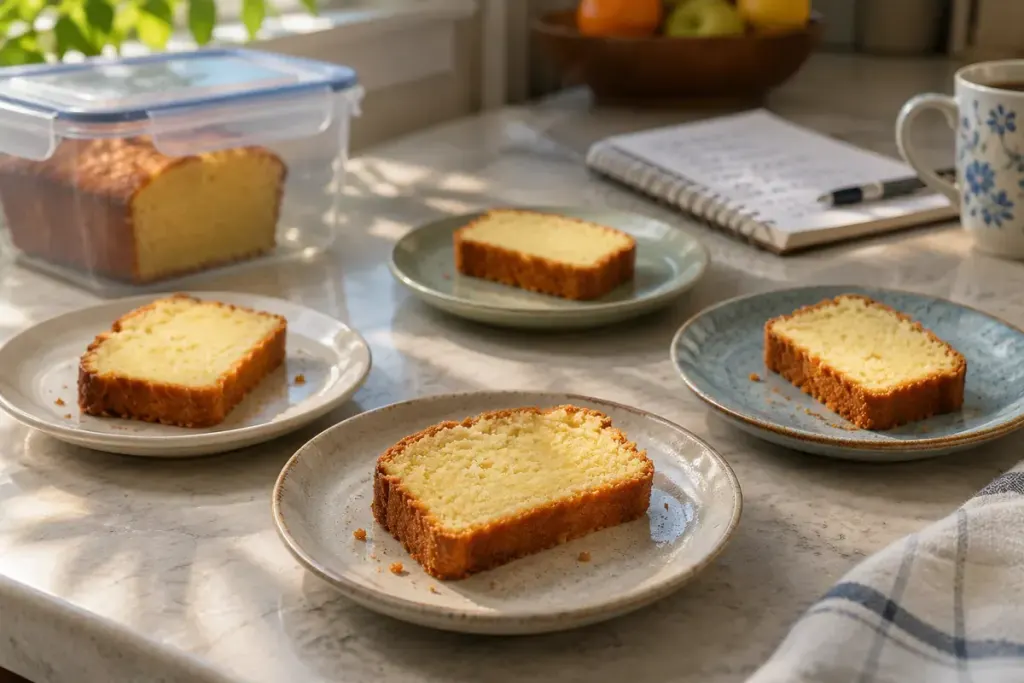
A loaf cake that seems disappointing when warm can taste more balanced the next day. Another may lose the tender edge you liked. Instead of turning that experience into a rule for every cake, use one loaf to make a small comparison you can repeat.
This is an observation exercise, not a shelf-life test. Choose a plain, fully baked loaf without a perishable filling or topping. Follow its recipe’s storage instructions. King Arthur Baking’s storage guide distinguishes plain cakes from cakes containing ingredients that require refrigeration; a cream-filled cake does not belong in a room-temperature experiment.
Keep the comparison fair
Let the loaf cool completely. Cut similar-sized slices from neighbouring positions rather than comparing the crusty end with the centre. Record the recipe, bake time and when the cake finished cooling. Taste one portion that day and describe it before deciding whether you like it.
Wrap the remaining comparison portions as the recipe directs. Keep the conditions consistent and label the tasting times. Do not deliberately leave a slice uncovered overnight just to create a dramatic result: that mainly tests exposure to air.
Use four observations, not one score
- Aroma: what do you notice before taking a bite?
- Crumb: does the slice bend, crumble or feel compact?
- Flavour: are sweetness, citrus, spice or bitterness easy to distinguish?
- Finish: what remains after swallowing?
On the following day, compare portions at a similar serving temperature. A cold slice and a room-temperature slice introduce another variable. If someone else joins in, give the portions simple codes and write notes before discussing them.
King Arthur’s discussion of resting cakes offers examples of why recipes can behave differently. Your own notes should remain narrower: “This wrapped loaf tasted less sharply lemony on day two” is more useful than “All cakes improve overnight.”
Use the result to plan the next occasion. Perhaps this recipe suits baking a day ahead; perhaps its best feature is the freshly cooled crust. Either conclusion gives you a serving decision grounded in the cake you actually make.