
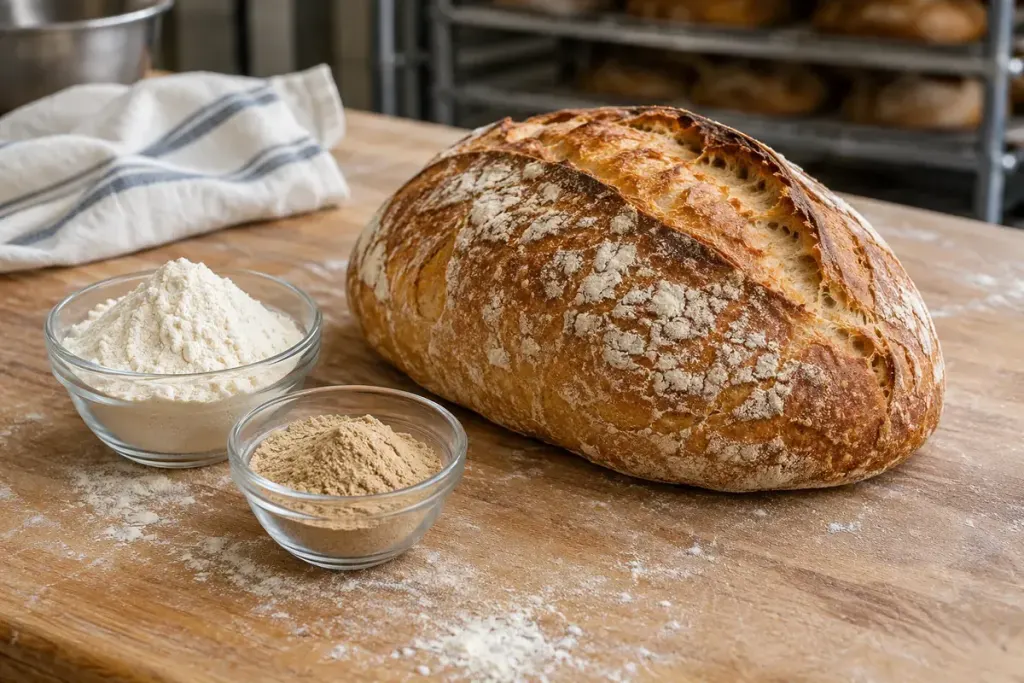
Two pale powders labelled malt can behave differently in the same dough. One changes starch breakdown as the bread develops; another mainly contributes flavour and colour. Swapping them because they look alike can turn a familiar recipe into an uncontrolled experiment.
King Arthur Baking’s comparison of malt ingredients identifies the key distinction: diastatic malt retains active enzymes, while non-diastatic malt does not. Those enzymes help turn flour starch into sugars. More activity is not automatically better; excessive diastatic malt can contribute to a gummy result.
Which malt is on the shelf?
- Diastatic malt
- The enzyme-active option: its quantity and the flour formulation matter.
- Non-diastatic malt
- An ingredient chosen principally for flavour and colour rather than active enzymes.
- Malted milk powder
- A different mixture. Read the ingredients instead of treating it as a direct bread-malt replacement.
Look for “diastatic” or “non-diastatic,” the ingredient list and the manufacturer’s intended use. Malted milk powder is another product again, with ingredients and a purpose that should not be assumed equivalent to a bread-making malt. A jar of syrup also introduces a different physical ingredient from a dry powder.
Next check the flour label and the recipe. Some flour already contains malted barley flour. A formula developed for one flour may not need the same addition when another flour is used. This is a reason to follow a tested formula, rather than adding a generous spoonful because yesterday’s loaf was pale.
Make the first comparison easy to interpret
If a recipe specifies a particular malt, obtain that type or use a substitution explicitly approved by the recipe developer. Keep the flour, dough size, fermentation conditions and baking method consistent. Record the ingredient’s full name and the amount by weight, not simply “malt added.”
Compare the cooled crumb as well as the crust. A darker loaf is not sufficient evidence that every other change was an improvement. If the result becomes sticky or unusually gummy, return to the formula and ingredient specifications before making a second adjustment.
For a practical baking notebook, keep flavour additions and enzyme-active ingredients in separate columns. That small distinction makes the next shopping decision much easier: you are choosing an ingredient for a defined job, rather than treating every form of malt as the same brown-bread shortcut.