
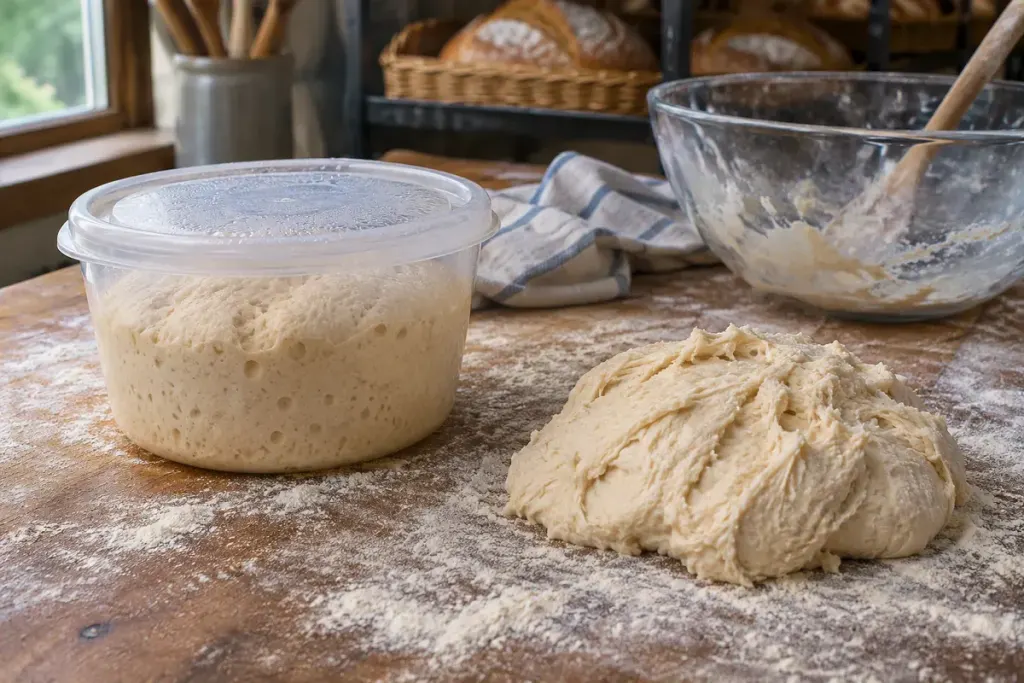
A small piece of yesterday’s bread dough can be an ingredient in today’s loaf. In a planned formula, that fermented portion is called pâte fermentée. Its value comes from controlled fermentation, not simply from being a leftover that needs using.
King Arthur Baking’s preferment reference describes pâte fermentée as mixed dough containing flour, water, salt and yeast. That last pair matters: it is different from an unsalted poolish and from a maintained sourdough culture. A recipe written for one preferment should not be converted by swapping equal spoonfuls of another.
Count what is already in the piece
Suppose a formula includes a portion of fermented dough as well as fresh flour and water. The fermented portion already contributes ingredients to the final loaf. Adding an unmeasured handful to a completed recipe changes the flour total, hydration and salt balance at the same time. A result that feels firmer or rises differently may reflect those changes rather than a mysterious failure of fermentation.
For a first attempt, choose a tested pâte-fermentée formula that states the amount to prepare, its storage conditions and when to use it. Weigh the portion into a labelled container before the baking day becomes busy. Write the preparation time on the label and keep the formula alongside it.
A useful two-day baking note
- Record when the preferment was mixed and where it was kept.
- Note its appearance when the final dough is mixed.
- Record the final dough temperature if your usual method includes it.
- Compare the baked loaf after cooling, including flavour, crust and crumb.
Those observations let you repeat a successful schedule. “Overnight” can mean very different conditions in a cool kitchen and a warm one. Follow the recipe’s guidance rather than treating the clock alone as proof of readiness.
Use only dough that has been handled and stored appropriately. Pâte fermentée is a deliberate bread-making technique; it is not a reason to rescue dough with an uncertain history. Once the method is familiar, change one planned variable at a time so the next loaf teaches you something useful.