
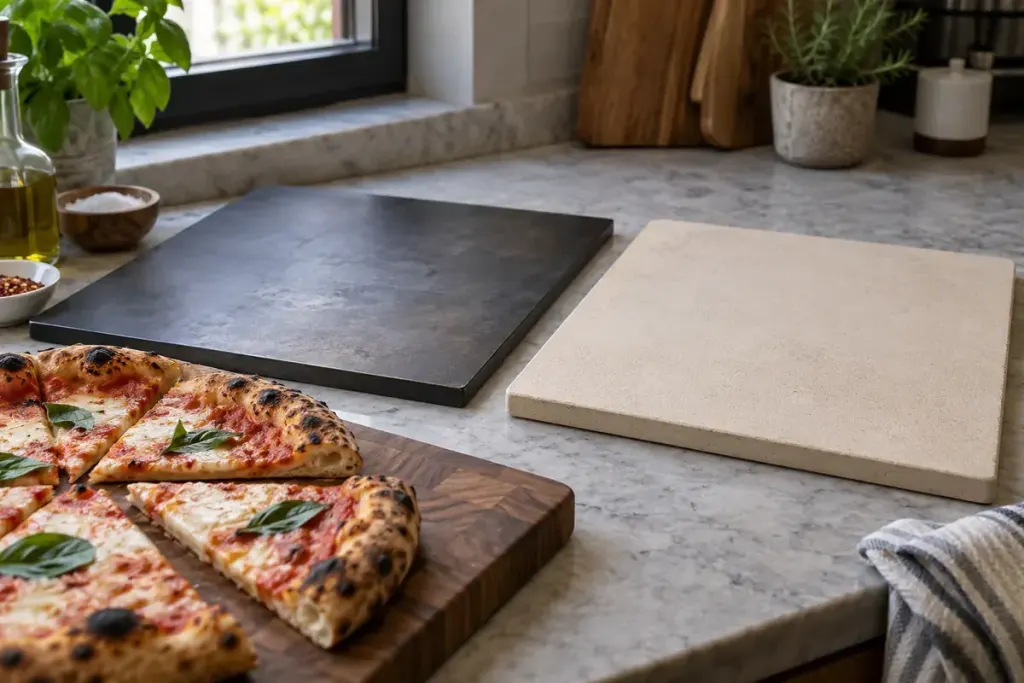
The oven says the same temperature, the dough is familiar, yet a pizza moved from a stone to a steel suddenly develops a much darker base. That is not necessarily a faulty recipe. The baking surface changes how quickly heat reaches the dough.
Both a stone and a steel provide a substantial hot surface beneath the pizza. Steel conducts heat more readily, so the underside can cook faster. King Arthur Baking’s comparison of the two surfaces explains this difference in thermal conductivity. A steel is therefore not simply a stone made from a more durable material; changing between them can require a different baking routine.
Keep the comparison small
If you already like your dough, keep its weight, thickness and topping quantity consistent for the first trial. Record the rack position, preheating routine and the moment the underside reaches the colour you want. Changing the dough, oven setting and surface together makes a disappointing result difficult to explain.
Check the top and bottom separately. A well-browned base beneath pale toppings suggests that the balance of heat needs attention. Continuing to bake solely for the top may burn the underside. Use the recipe and your oven’s instructions to decide whether a different rack position or finishing method is appropriate; do not put a surface under a grill unless its manufacturer permits it.
Allow for the practical differences
- Weight: check that the oven rack and your handling method suit the product.
- Preheating: the air reaching its set temperature does not prove that a thick surface has heated through.
- Care: follow the specific cleaning and drying instructions. A ceramic stone and a seasoned steel do not need identical treatment.
Let either surface cool safely before moving or cleaning it. Keep the next bake’s notes beside the recipe: surface used, pizza thickness, time and result. That small record tells you more than declaring one material universally better. The useful choice is the one whose heat transfer, weight and care routine fit the pizza you want to make.