
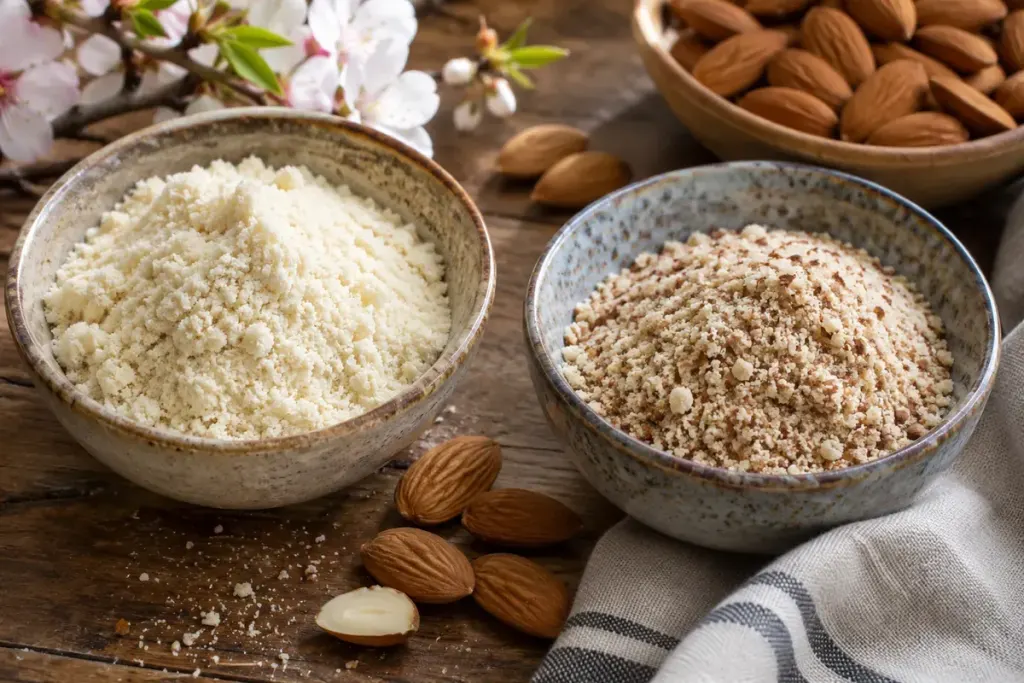
Two bags can both say “ground almonds” and produce noticeably different cakes. One feels almost powdery; the other has visible fragments and brown flecks. Before deciding which is better, decide what the bake needs: a smooth macaron shell, a tender almond cake or a topping with a little crunch.
Read past the product name
Blanched almonds have had their skins removed. Natural or unblanched almond flour retains them. The grind is another variable. King Arthur’s almond-flour guide notes that “meal” and “flour” can reflect brand terminology, and products with the same grind may be interchangeable. Do not assume every bag called meal is coarse or every flour is exceptionally fine.
For a first batch, put a teaspoon on a white plate. Look for skin flecks, rub a little between clean fingers and compare it with the recipe photograph. This is a kitchen observation, not a laboratory test, but it makes a better starting point than the front-label wording alone.
- For a pale, smooth finish, begin with the finely ground blanched product specified by the recipe.
- For a crumble or deliberately rustic biscuit, visible almond pieces may be part of the appeal.
- If a recipe names a particular product or milling style, treat that detail as an ingredient specification.
Make the first comparison small
Suppose your usual almond cake uses a fine flour and the replacement bag feels coarser. Bake a small test portion using the recipe’s weights and record the result after cooling. Changing the grind, liquid and baking temperature together makes it difficult to identify what helped.
Grinding the replacement longer is not an unlimited remedy. Almonds contain oil, and prolonged processing can move the mixture towards a paste. Sifting also removes material: if you discard a large coarse fraction, you have changed the amount used.
Finally, almond flour is not a universal one-for-one replacement for wheat flour. Choose a recipe developed for it, and check allergen and cross-contact information when baking for someone with dietary requirements. Keep the bag’s storage instructions with the ingredient, especially if you transfer it to an unlabelled container.