
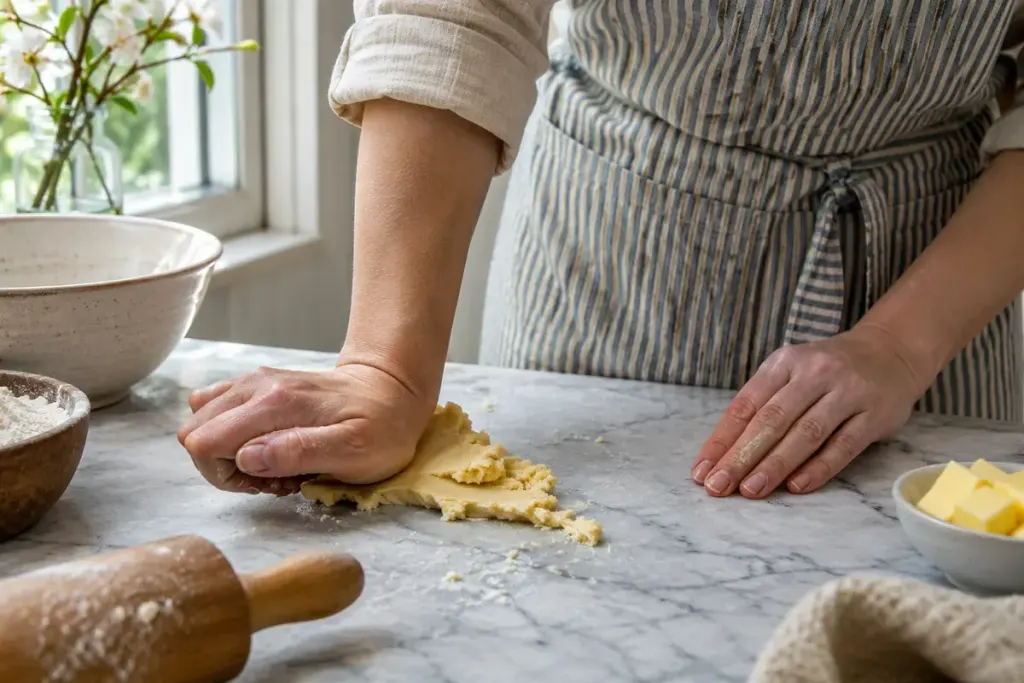
A rough pile of pastry dough can tempt you into kneading until every crumb disappears. Fraisage offers another approach: a brief forward smear with the heel of the hand, working small portions across the bench before gathering them together.
King Arthur Baking’s fraisage guide shows how this motion helps distribute butter in thin layers. The important word is brief. It is a controlled finishing step, not an invitation to work pastry like bread dough.
Watch the dough, not a repetition count
Begin with the mixture prepared as your recipe directs. Take a small portion, press it away from you once with the heel of your hand, then set it aside. Work through the remaining portions and gather the dough with a scraper. A cool surface and short handling time make the movement easier to control.
You are looking for dough that can come together while retaining its pastry character. A greasy smear, butter sticking to warm fingers, or a mass becoming increasingly elastic is a reason to pause and reassess. Resting or chilling may be needed according to the recipe; more pressing is not automatically the answer.
A small comparison is more useful than guesswork
On your next familiar tart recipe, note the dough temperature, how it held together before fraisage, and how it rolled after its rest. Keep the ingredients and baking method unchanged. Those notes let you connect the handling step with the result instead of changing flour, water and technique at once.
Fraisage is not required for every pastry. Puff pastry, laminated dough and deliberately crumbly mixtures have their own handling instructions. Use the technique where the recipe calls for it, and resist trying to turn every visible butter piece into a perfectly uniform paste.