
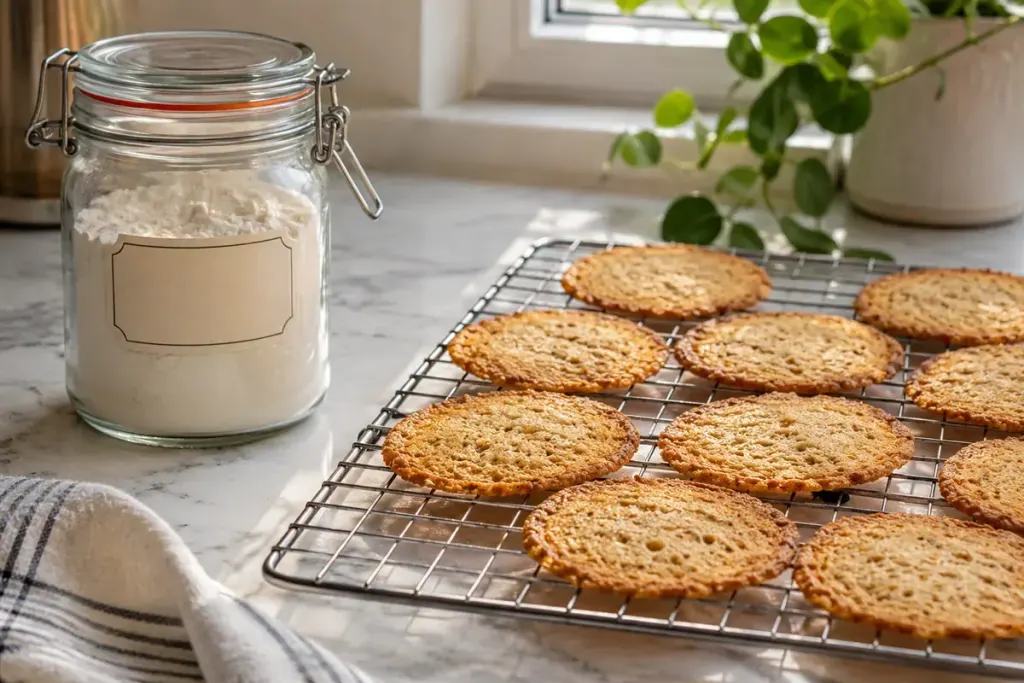
A traditional cookie recipe may list baker’s ammonia where you expect baking powder. The unfamiliar name is not a printing mistake. This food-grade leavener has a particular talent: helping suitable small, dry bakes develop a light, crisp structure.
The American Society of Baking’s ingredient guide explains its use in low-moisture products. Ammonium-based leavening releases gases during heating. In a suitable thin bake, those gases can escape; a thick, moist centre is a different environment. That is why the ingredient should not be treated as an interchangeable upgrade for every cake.
Let the recipe choose the leavener
Start with a tested recipe that explicitly calls for baker’s ammonia. King Arthur’s Crispy Swedish Cookies provides one example of the texture it is used to achieve. Follow that recipe’s measurements, mixing sequence and baking instructions rather than borrowing only the ingredient name.
Use a product sold specifically for food preparation. Household cleaning ammonia is not a baking ingredient. Keep the original food packaging so the identity, storage instructions and measuring directions remain clear.
If the recipe offers a baking-powder alternative, use that stated substitution. Expect the texture to differ. A substitute that makes a cookie acceptable does not necessarily reproduce the delicate crispness that motivated the original formula.
Compare after cooling
For a useful home comparison, make separate small batches from the recipe’s authorised versions. Keep the piece size, tray and oven position consistent. Label the batches before baking, then compare a fully cooled cookie from each. Warm softness can hide the difference you are trying to understand.
Record the bite as well as the appearance: does the cookie snap, crumble lightly, or retain a chewy centre? Also note the thickness you actually produced. Changing the shape while changing the leavener makes the result harder to interpret.
Baker’s ammonia is worth understanding because it belongs to a specific kind of bake. It is most useful when the recipe, shape and final texture agree. If a finished batch retains an unexpected strong odour, stop serving it and review the ingredient and recipe instructions rather than disguising the result with icing.