
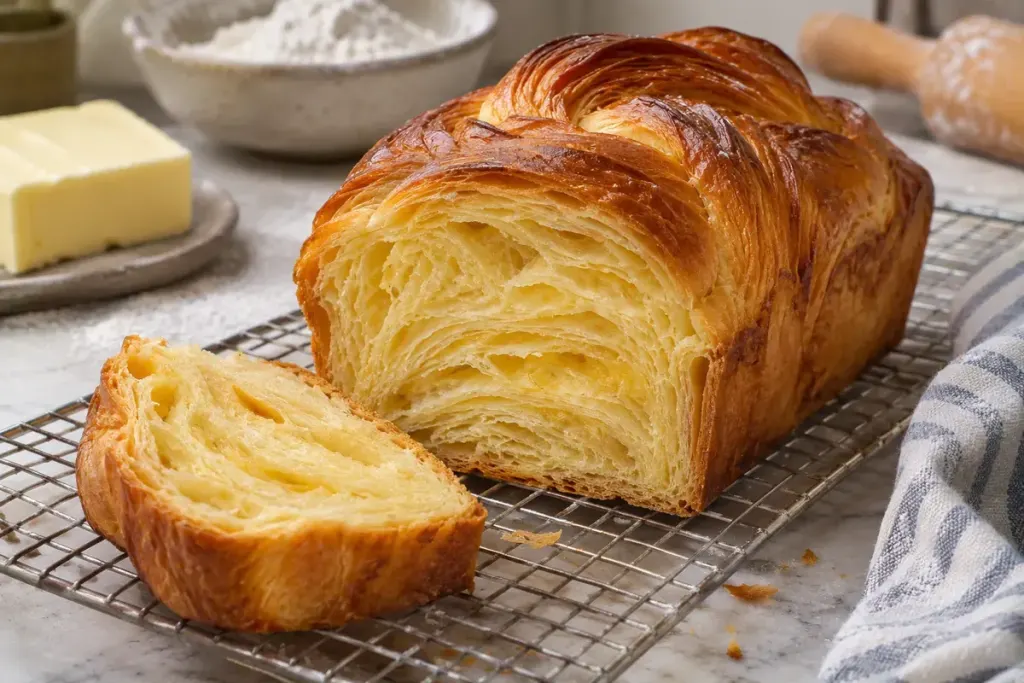
Cut through laminated brioche and you can see two kinds of richness: a tender bread crumb and distinct layers created during folding. Butter mixed into the dough and butter held between sheets of dough have different jobs. Treating them as one interchangeable addition is a quick way to lose the effect.
Use a formula written for the style you want. Even the name can conceal a different method: King Arthur’s faux-laminated brioche buns deliberately use a particular approach to create their layered result. A recipe with that description should not be silently converted into a traditional butter-block schedule.
Plan the working window
Read the recipe from mixing through baking before beginning. Mark the stages that require chilling, the number of folds and the proofing conditions. A cold dough is not automatically ready to roll if the enclosed butter is brittle; a soft sheet is not automatically workable if butter is smearing into it. The dough and butter need compatible handling textures.
For a first bake, make a short record rather than changing the formula: room conditions, how easily the first fold rolled, whether butter cracked or escaped, and how the shaped pieces looked before baking. Those observations give a failed layer a possible explanation. Adding extra flour at every sticky moment changes the dough and can obscure the original problem.
Keep the layers visible in your decisions
Roll with controlled pressure and follow the stated chilling pauses. If the dough resists and springs back, forcing it thinner can tear the structure you are trying to preserve. Keep the rolling surface lightly floured as the formula directs, and avoid trapping loose piles of flour inside a fold.
Judge the finished loaf after the recommended cooling period. Photograph one cut face and note whether layers are distinct, compressed or uneven. On the next attempt, alter one handling decision at a time. A clearer folding schedule is often more informative than immediately increasing the butter or inventing another fold.