
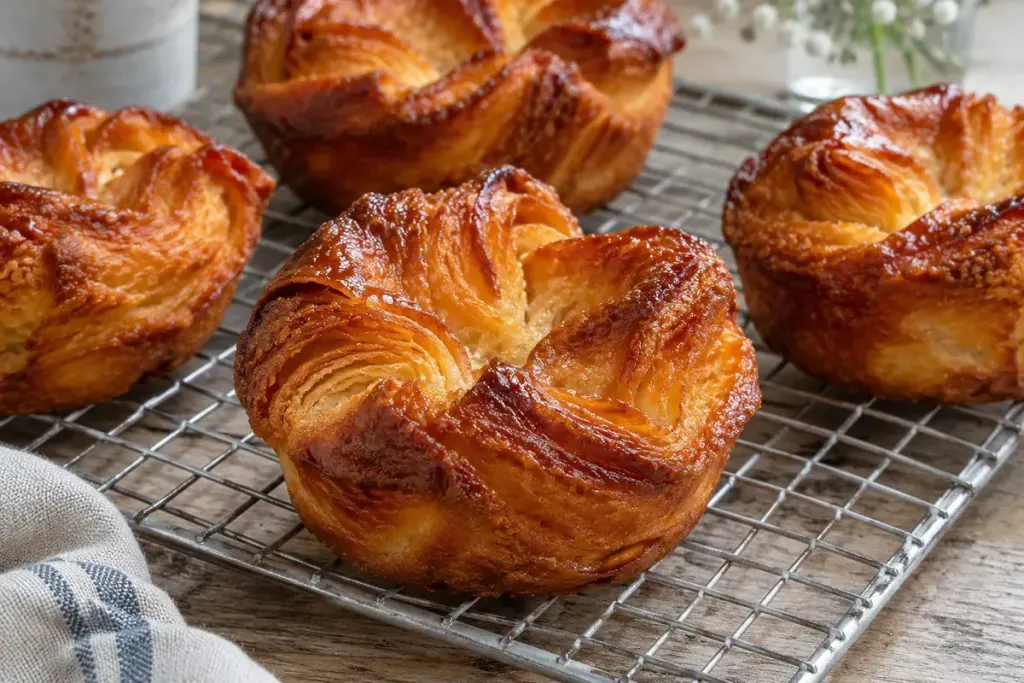
The first bite of a kouign-amann can be brittle and caramelised, followed by a soft, buttery centre. That contrast comes from more than a sprinkling of sugar on a finished pastry. Sugar participates in the folded dough and in the surface that meets the hot tin.
There is more than one working method. King Arthur Baking’s discussion of the Breton pastry contrasts a traditional approach with versions built from croissant-style dough. Its classic recipe folds butter and sugar into a lean bread dough. Choose a complete method before deciding where sugar belongs in your own schedule.
Draw the folding sequence first
A small sketch beside the recipe can be more useful than another dusting of flour. Mark which folds contain butter, when sugar is added, and which rests are specified. Mixing the timing from two different recipes can leave you with a dough whose temperature and moisture no longer match either method.
Keep the distinction between a flexible butter layer and melted butter in mind as you work. If the dough becomes difficult to handle, follow the selected recipe’s temperature guidance. A sugary dough can be messier than a plain laminated one; a little stickiness does not automatically mean the ingredient proportions should be changed.
Plan the finish while the oven is cold
Read the unmoulding instruction before baking. Caramelised sugar is very hot, and a pastry that releases at one stage may stick firmly after cooling in the tin. Set out a suitable rack or serving surface, heat protection and the utensils the recipe calls for. Do not try to catch a falling pastry with your hand.
On the first attempt, keep the shape simple and make notes about the crust, centre and release from the tin. If the centre is pleasant but the exterior lacks colour, that observation is more useful for the next bake than calling the whole batch a failure. Change one part of the method at a time.