
A bowl of semolina dough can feel rough during its first mix. Before reaching for another splash of water, check what the recipe means by semolina and whether its resting stage is still ahead.
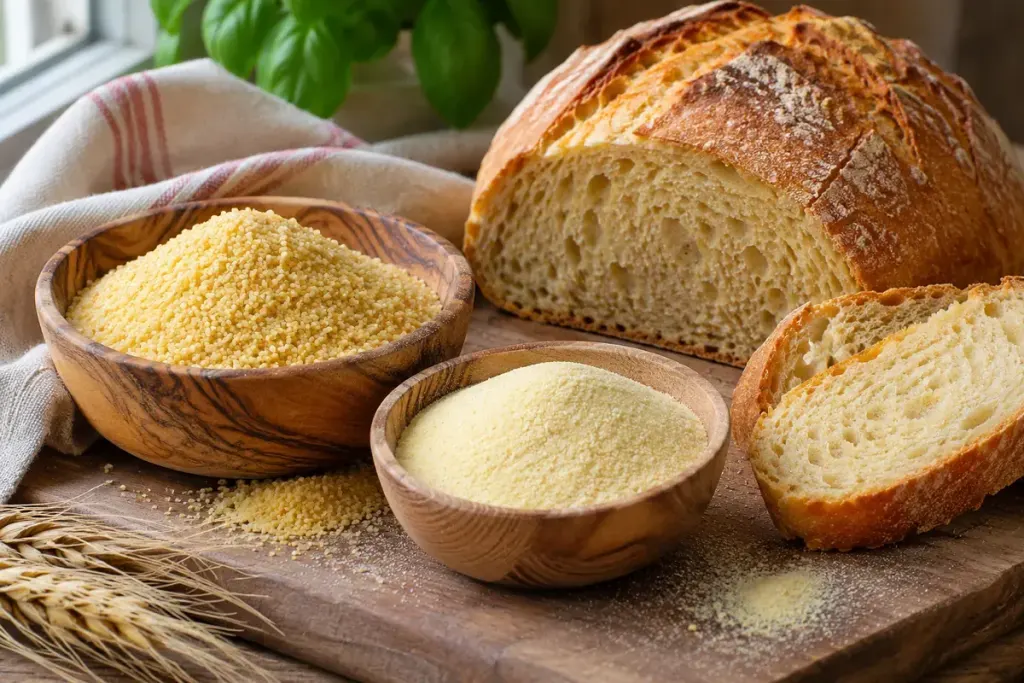
King Arthur Baking distinguishes coarse semolina from more finely ground durum flour, although both come from durum wheat. The distinction matters when matching a bag to a bread formula. A yellow colour alone cannot tell you that you have the intended grind.
Read the ingredient and the method together
Some formulas combine durum flour with ordinary bread flour; others are designed around a particular semolina product. Keep the first attempt close to that specification. Substituting an unfamiliar grind while also changing the flour ratio and kneading method makes a disappointing loaf difficult to diagnose.
Follow any mixing and resting stages before judging the finished dough. Water continues to distribute through the flour during preparation, so the texture at the first stir is not the only useful observation. Do not add a large amount merely to make a coarse dough immediately resemble a familiar white loaf.
A comparison worth recording
For your next bake, write down the product name and whether the label says coarse, fine or remilled. Weigh the ingredients. Photograph the dough after the initial mix and again after the recipe’s rest, using the same bowl position. Note whether dry particles remain, whether the surface has become more cohesive and how readily the dough stretches during the prescribed handling.
If an adjustment is needed, make one small, measured change rather than alternating handfuls of flour and unmeasured water. Record it for the next batch. The finished loaf supplies the final evidence: compare its cooled crumb, volume and eating texture, not just the smoothness of the raw dough.
Keep semolina used for dusting a peel separate in your notes from semolina mixed into the bread. The same ingredient can help a loaf release from a surface while playing a very different role inside it.