
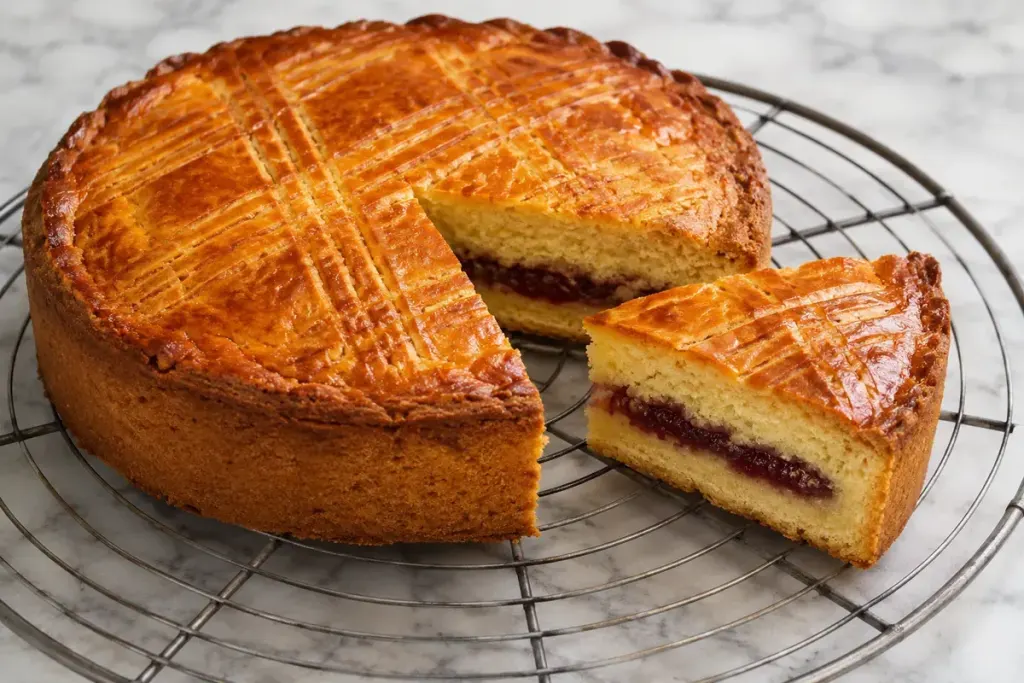
Two slices of gâteau Basque can look similar from above and offer quite different experiences once cut. The pastry encloses a filling, and cream and black cherry are two familiar ways of defining that centre.
France’s guide to gâteau Basque describes the cream and cherry question within the pastry’s regional tradition. Its account also makes clear that flavourings and versions vary. The name identifies a family of preparations rather than a guarantee that every bakery uses an identical recipe.
Look at the cut surface
Before deciding which version you prefer, notice the balance between pastry and filling. Is the centre a thin layer or a more substantial part of the slice? Does the pastry crumble easily or hold a clean edge? These observations describe the particular cake in front of you; they should not become rules about every cream or cherry version.
A simple tasting comparison can use small slices served under similar conditions. Record the filling, the bakery or recipe and the temperature at which you tasted it. A chilled slice and a room-temperature one may give different impressions, so keep that difference in your notes rather than attributing everything to the filling.
Ask a specific question at the bakery
Instead of asking only whether the cake is traditional, ask what the filling contains and how it should be stored and served. That is especially important when ingredients or allergens affect your choice. A name or surface decoration is not a reliable ingredient declaration.
For home baking, choose a complete recipe for the version you want. Replacing a cream filling with an arbitrary quantity of jam changes more than the flavour: the filling’s consistency and behaviour matter to the finished cake. Treat such a change as a separate recipe experiment.
The useful comparison is not a contest to declare one centre universally superior. It is a way to notice how a shared pastry tradition accommodates different tastes, and to describe the slice you enjoyed with more precision than simply calling it sweet.