
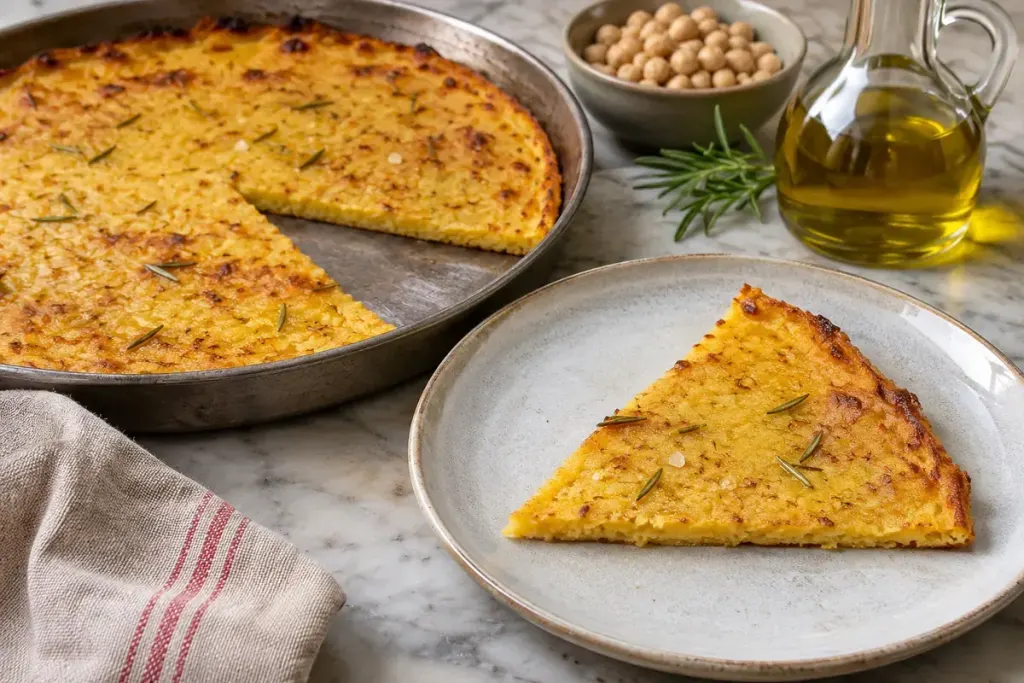
Farinata looks modest when it goes into the oven: a loose chickpea-flour batter in an oiled pan. What comes out can have a browned surface, a tender middle and edges worth reaching for first. Its simplicity makes the pan and the batter depth unusually noticeable.
For a starting formula, use a complete recipe such as GialloZafferano’s chickpea farinata. Treat the flour, water, pan size and oven directions as one system. Changing only the quantity while keeping a much smaller pan can turn a thin bake into a different dish.
Look at the layer before you look at the clock
Two pans can hold the same amount of batter very differently. A wide shallow tray spreads it out; a small round tin makes it deeper. If the centre is much thicker than the recipe intends, waiting for that centre to set can leave the perimeter overdone.
Before mixing, put the chosen pan beside the recipe and check its internal dimensions. If you are scaling, compare surface area rather than simply deciding that one pan “looks about right.” A round pan’s area depends on the square of its radius, so a modest change in diameter can make a substantial difference.
Give the first attempt a clear purpose
Keep toppings restrained for the first bake. A crowded layer of wet vegetables makes it harder to judge whether a soft patch comes from the batter or the topping. Follow the recipe’s resting and storage directions; resting time is not a reason to ignore safe handling in a warm kitchen.
When the farinata is ready, note three things before adjusting the next batch: whether it released from the pan, how the middle felt after a brief rest, and how quickly the edges coloured. A short note about pan dimensions is more useful than “needed longer.”
Serve the first piece while it is pleasantly warm, with something fresh alongside. On the next attempt, change one variable—perhaps the pan or the topping amount—so the result teaches you something specific.