
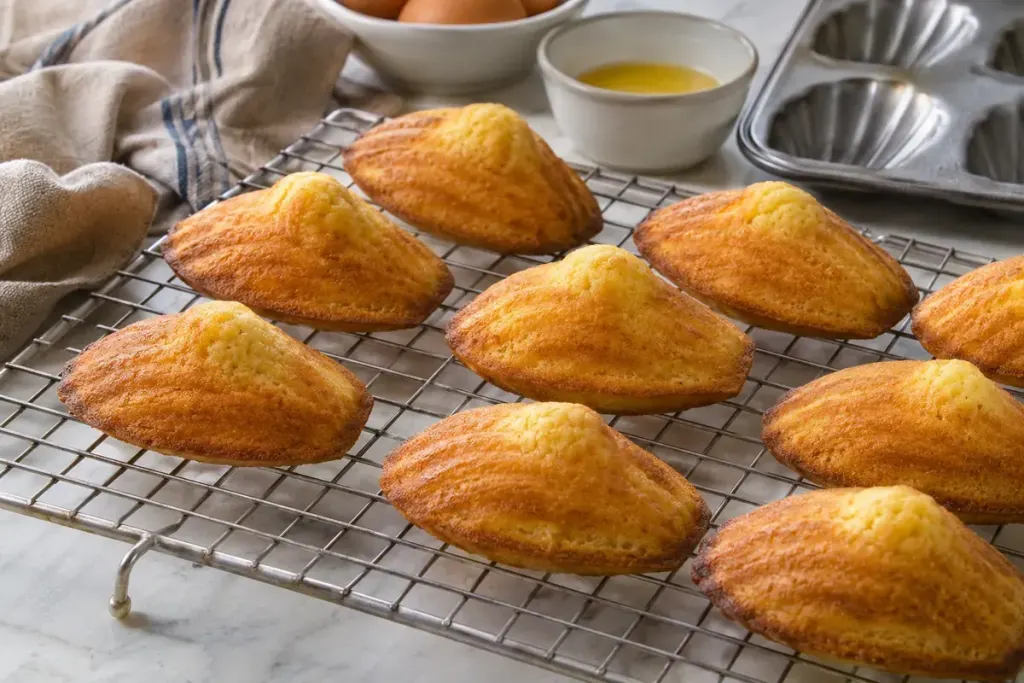
A madeleine has two faces: a ridged shell on one side and, often, a rounded hump on the other. That hump is satisfying to see, but it is only one clue to the bake. A deeply raised cake with a dry centre is not a better madeleine than a modestly domed one with a tender crumb.
Start with a complete tested formula. The Joy of Baking madeleine recipe uses a chilled batter and carefully prepared moulds. Its chilling advice belongs with its ingredient proportions and oven instructions; taking one temperature trick from another recipe can change the result.
Give the first tray a fair chance
Prepare every ridge of the mould as the recipe directs. A patch of bare metal can hold a small cake firmly enough to tear it when it comes out. Check whether your pan is metal or silicone and whether the recipe was developed for that material.
Portion the batter consistently. If one cavity is nearly full and the next contains a thin spoonful, the tray is testing two quantities as well as the recipe. A small scoop or weighed portions make the comparison easier.
Preheat fully before loading the pan. Record the shelf position and whether fan assistance is on. These ordinary details are more useful for a second attempt than a note saying only that the oven was hot.
Read the cake after it cools briefly
Look at the shell’s colour, then break one cake open. Is the centre cooked through? Does the edge feel crisp while the middle remains soft? Did a stuck ridge tear during release, or was the cake itself fragile? Those are different problems.
If you want to investigate the hump, keep the formula, portion size and pan unchanged. Compare the recipe’s recommended rest with one carefully recorded alternative, while still following safe refrigeration practices. Do not alter the flour, raise the oven temperature and add more baking powder in the same trial: even a good result would be difficult to explain.
Madeleines reward a short journey from tin to table. Plan the tea or coffee before the tray comes out, and save a photograph of the cut centre alongside your baking notes. The shape is attractive; the crumb is what makes someone reach for another.