
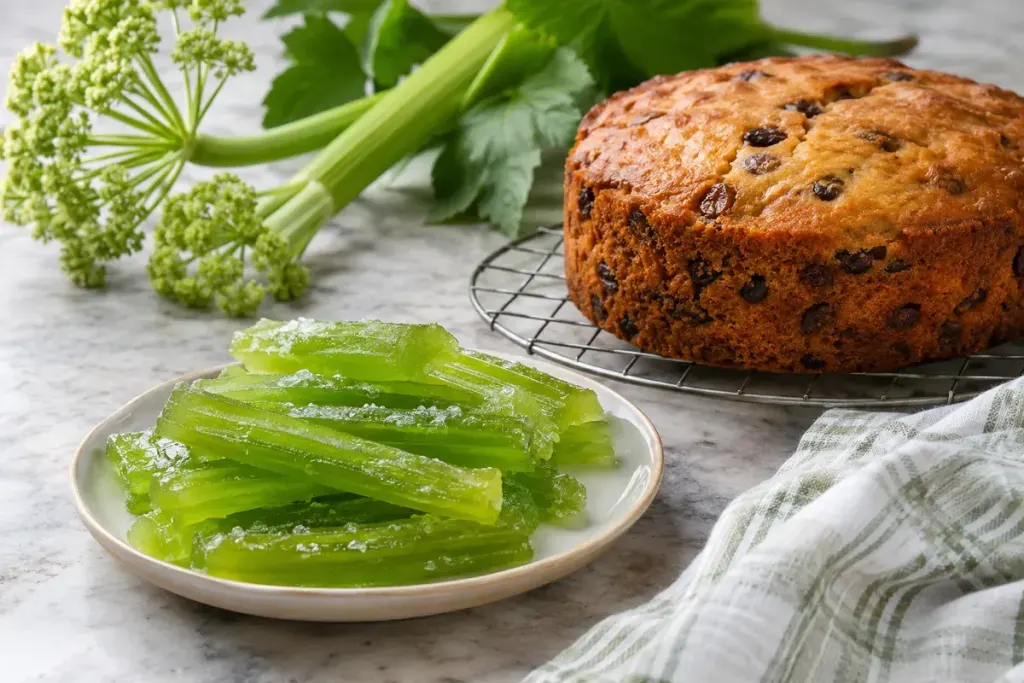
The green slivers on an old-fashioned cake are not necessarily citrus peel. They may be candied angelica: pieces of a plant stem preserved in sugar. Knowing that small distinction helps when you read a traditional baking recipe or want a decoration with more character than another spoonful of sprinkles.
The Royal Horticultural Society’s growing guide identifies Angelica archangelica as a preferred culinary choice because of its softer stems and leaves. It describes harvesting young, tender stems before flower stalks form. That is useful background, but buying a clearly labelled culinary product is the practical starting point for most bakers.
Taste the ingredient before choosing the quantity
Angelica is aromatic as well as sweet. Cut a small piece and try it on its own, then beside a bite of the cake or biscuit you intend to decorate. This simple comparison tells you more than judging the bright colour through a packet. A large strip can dominate a delicate bake even when a few tiny pieces work well.
For a trial, decorate one finished portion rather than the whole batch. Snip the stem into short lengths with clean kitchen scissors, or slice it with a sharp knife on a stable board. Thin pieces can suggest leaves or stems in a simple fruit-and-flower arrangement. Keep the design edible and easy to divide when the cake is served.
Read the packet as an ingredient list
Different products can vary in colour, syrup coating and firmness. Check the listed ingredients, storage directions and any allergen information rather than assuming every green candied stem is identical. If you replace angelica with candied citrus, expect a different flavour; the substitute fills a similar decorative space without reproducing the same ingredient.
A first experiment need not involve making it from a garden plant. Do not identify an unfamiliar wild stem from a baking photograph. Start with a food-grade product, label the opened packet, and record how much you used. The next cake can then repeat a result you actually liked.