
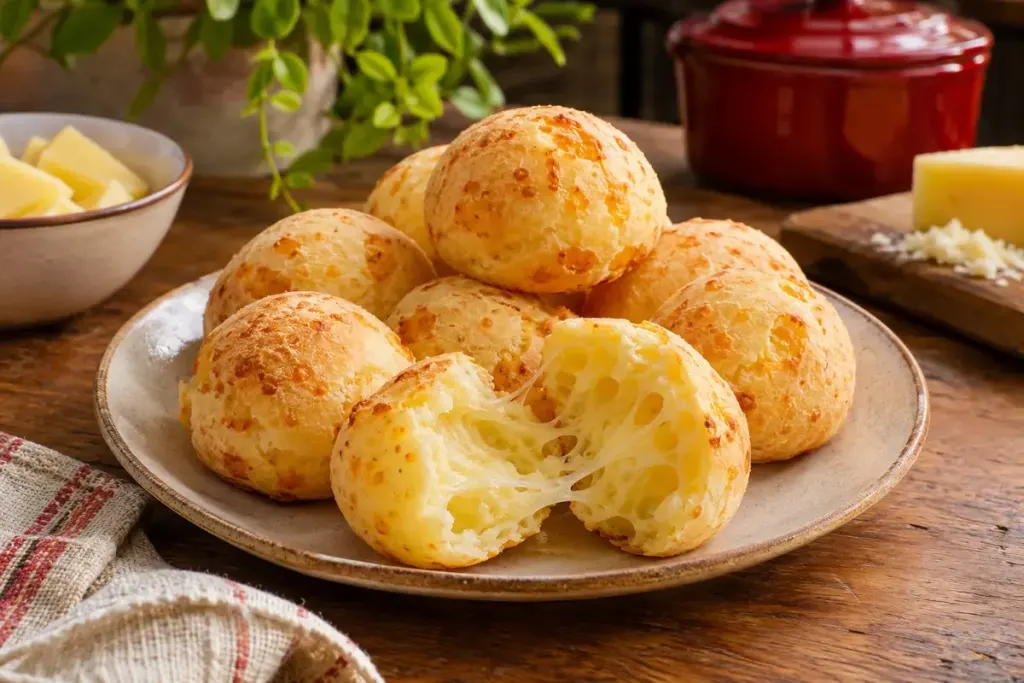
Split a warm pão de queijo and the centre can look glossy, elastic and unexpectedly open. Someone expecting a wheat dinner roll may call that texture unfinished. Brazilian cheese buns belong to a different baking tradition, and their starch-based structure deserves its own set of expectations.
King Arthur Baking’s pão de queijo recipe uses tapioca starch alongside cheese, eggs and liquid. It is a useful worked example of a bun whose chew does not depend on developing wheat gluten. Follow one tested formula completely before combining quantities from several versions.
Check the bag before changing the method
Tapioca starch is not the same ingredient as coarse tapioca pearls. Nor should a bag labelled cassava flour automatically be treated as an identical replacement: the product name and the recipe’s specified ingredient need to agree. Brazilian recipes may also distinguish sweet and sour starch. Those labels are a reason to read closely, not to make a casual one-for-one substitution.
For your first batch, write down the exact starch product and cheese used. A photograph of each package is more useful later than a note saying “the usual flour”. Keep the recipe’s portion size consistent so that differences between buns are not simply differences in their size.
Compare like with like
Let one bun cool enough to handle before examining its centre. Describe the result in concrete terms: a thin or thick crust, an elastic crumb, a dense wet pocket, or a centre that has collapsed. “Not like bread” does not tell you which part of the process needs attention.
If you make another batch, change only one deliberate variable and record it. Different cheese, larger portions and a different starch all at once make troubleshooting difficult. Use the tested recipe’s baking instructions rather than relying only on colour.
The reward is a clearer target: a cheese bun with its own enjoyable chew, judged on the recipe you actually made rather than on the crumb of a sandwich loaf.