
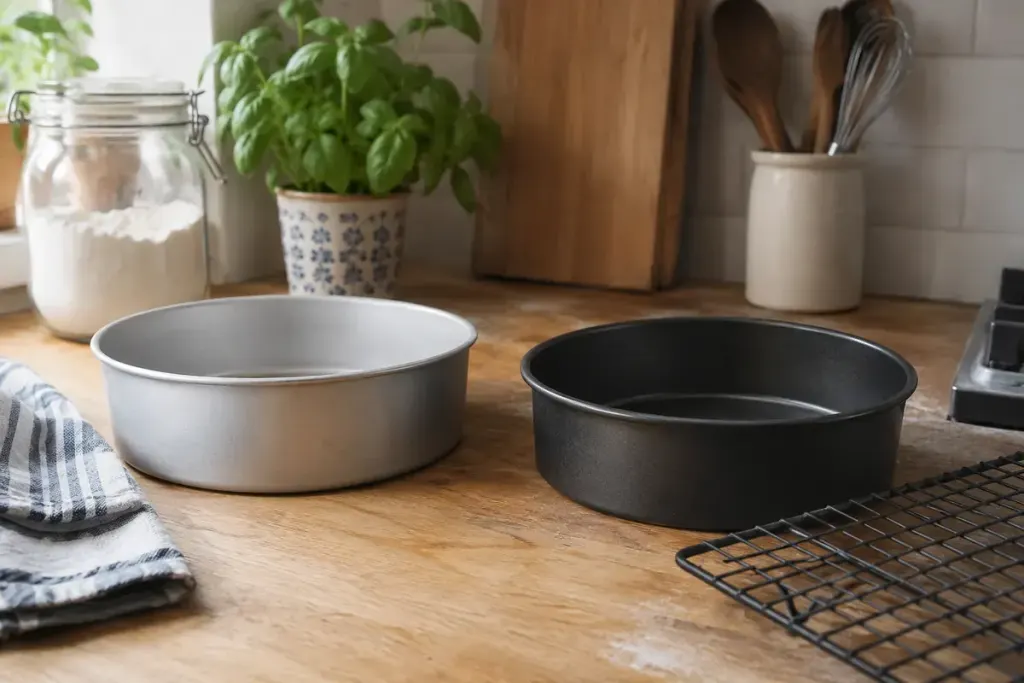
The same cake recipe produces a dark outer edge in one tin and a paler finish in another. Before changing the sugar or mixing method, look at the pan. Its material, surface and dimensions are part of the baking conditions.
A recipe’s time is a checkpoint, not a promise that every piece of bakeware will behave identically. The useful comparison is the cake’s progress in the actual pan you use.
Keep size separate from surface
Check the inside dimensions and depth first. A larger footprint can make the batter shallower, changing how the centre cooks. Two pans sold under the same general name may not hold the batter at the same depth.
Then consider colour and material. Dark metal commonly browns exposed edges more aggressively than a light-coloured metal pan. Glass, ceramic and silicone introduce other differences; do not apply a single adjustment rule to every alternative.
Follow the recipe and bakeware manufacturer’s advice. If an adjustment is recommended for a particular pan, record it with that pan rather than rewriting the recipe for all future equipment.
Compare more than the top colour
Start checking at the appropriate point in the recipe. Use its stated doneness indicators, which may include the centre’s appearance, spring or a skewer test. A golden rim does not prove the middle is ready, and some recipes intentionally retain moisture.
If the edge is consistently too dark before the centre sets, note the pan, batter depth, oven setting and rack position. Change one relevant factor on the next attempt. Turning several knobs at once makes it difficult to identify what helped.
For an illustrative kitchen record, write “dark metal, 20 cm, middle shelf; edges coloured before centre” instead of simply “baked too long.” That description is useful when consulting the recipe author or comparing another tin.
Let the cake cool and release it as directed. A better bake is the combination of an appropriate pan and observed doneness, not a race to match a photograph at exactly the advertised minute.
King Arthur Baking demonstrates how a dark cake pan affects browning. Use the recipe and pan guidance together when evaluating a change of tin.