
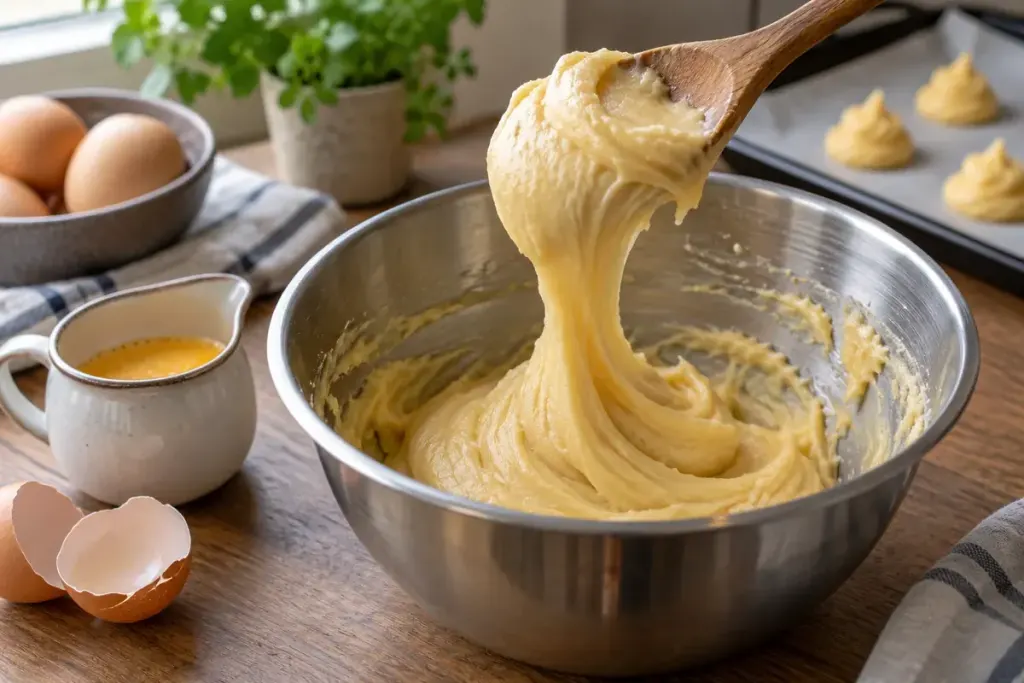
The first egg goes into the cooked flour mixture and everything suddenly looks slippery and broken. This is the moment when a new choux baker may reach for extra flour. Put the flour down and keep mixing: a rough-looking stage is not automatically a failed dough.
Choux is a cooked paste that must become smooth enough to pipe while still holding a shape. A tested recipe gives the quantities and sequence. Your job at the bowl is to notice whether each stage has actually finished before moving to the next.
Finish one addition before starting another
King Arthur’s pâte à choux recipe adds eggs individually after the cooked mixture has cooled appropriately, incorporating each fully before the next. Its illustrated guide shows the temporarily wet appearance and describes a finished paste that pipes readily without running out of the bag.
Keep your recipe beside the bowl and note the egg size or weight it specifies. If it provides a range or allows a final consistency adjustment, add that last portion gradually. If it specifies a fixed quantity, do not casually omit half the eggs because an early stage looks loose; first check that you have followed the cooking and mixing instructions.
Use a small piping test
Before filling a whole tray, pipe one test mound on the prepared baking surface. Does it settle gently while retaining a mound, or spread immediately into a puddle? Compare it with the recipe’s photographs. This is a useful observation, not a universal measurement that makes every choux formula interchangeable.
Record what you see in ordinary language: “held a ridge”, “difficult to squeeze”, or “spread before the next mound”. A photograph taken from the side will tell you more on the next attempt than a note saying only “bad texture”.
If the paste is much too loose, stop and consult the recipe’s troubleshooting guidance before adding raw flour. That change does not repeat the earlier cooking stage. Likewise, a stiff mixture is not an invitation to pour in unmeasured liquid.
Once the consistency is right, follow the recipe’s piping, baking and drying instructions. Keep the bowl notes with the result: the appearance before baking and the structure afterwards belong to the same experiment.