
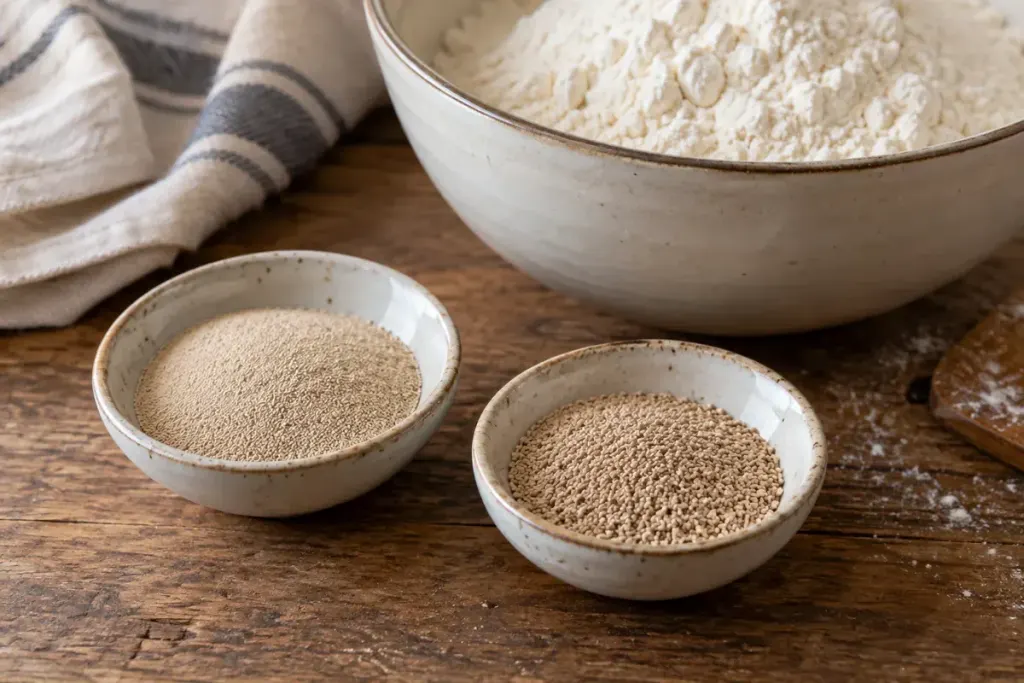
A bread recipe calls for instant yeast, but the cupboard contains active dry. The useful question is not which one is universally better. It is what your particular yeast needs before it can work in this dough.
King Arthur Baking’s yeast guide describes the different forms and substitution considerations. Instant yeast is commonly mixed into the dry ingredients. Active dry products may specify dissolving first; follow the packet rather than assuming every brand behaves identically.
Read three instructions before opening the packet
- Quantity: use the recipe’s named yeast type and weight where provided. A packet is a package size, not a universal measurement.
- Liquid: check the manufacturer’s temperature guidance and whether the yeast is added to liquid or flour.
- Storage: check the expiry date and instructions after opening. Write the opening date on a larger container.
If the instructions require dissolving yeast, take that water from the recipe’s total rather than adding an extra cup. Otherwise the substitution changes hydration as well as yeast handling, and a sticky dough becomes harder to interpret.
Let the dough set the pace
Changing yeast can change the timetable. A kitchen that is cooler than the recipe writer’s kitchen can do the same. Follow the recipe’s description of expansion and texture instead of forcing the dough into the printed number of minutes.
For a first comparison, keep the flour, liquid and dough size unchanged. Note the product used, mixing method and approximate room conditions. Altering the yeast, flour and sugar together leaves you unable to explain the result.
Bread-machine programmes and very sweet doughs deserve their own checks; they may depend on a specific yeast or schedule. Choose a tested recipe that names the product you have when you want the simplest start. The aim is a repeatable loaf, not proving that one packet can stand in for every other.