
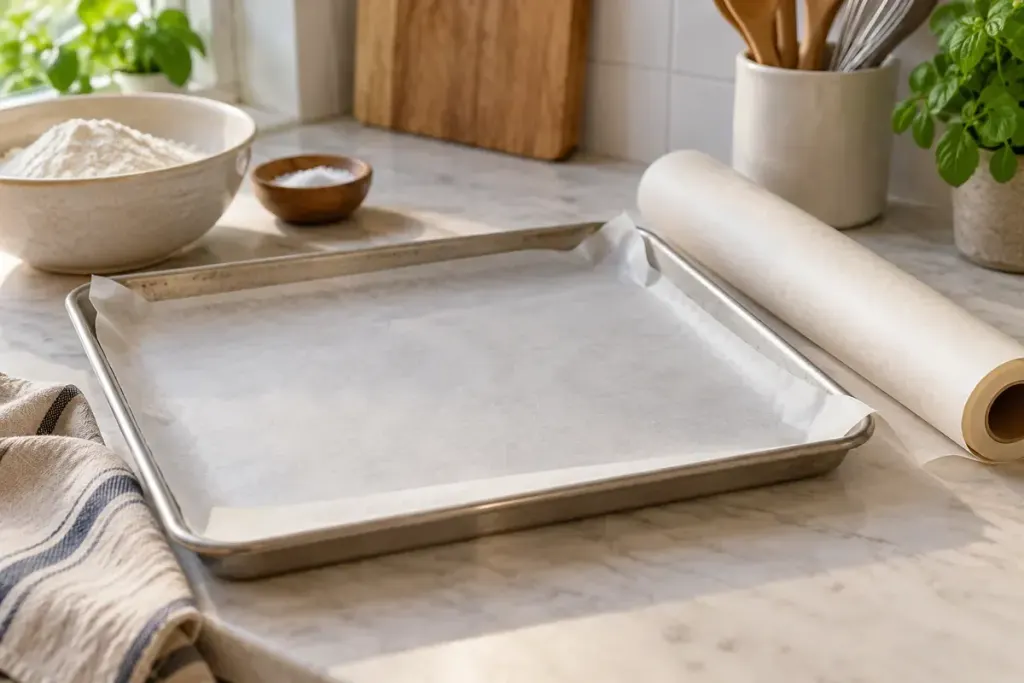
Two pale rolls sit in the kitchen drawer. Both feel smooth, both can keep food from sticking, and only one may be suitable for the exposed surface of a baking tray. Check the packaging before the batter is ready.
The coating changes the job
Waxed paper and baking parchment are different products. Waxed paper is useful for suitable cold preparation tasks, such as separating or wrapping food. Baking parchment is made for specified cooking uses, but it still has temperature and appliance limits.
For a concrete manufacturer example, Reynolds’ parchment instructions specify an oven limit of 425°F and exclude contact with flames and use under a broiler. Those are instructions for that product, not a universal rating for every paper. Its guidance also describes a limited wax-paper cake-pan use when completely covered by batter; that does not make exposed waxed paper a general baking-tray liner.
Keep the carton until the roll is finished
A loose roll is difficult to identify confidently by colour or touch. Keep the label with it, particularly if several people use the drawer. If the identity is uncertain, use a known suitable liner or prepare the pan by the recipe’s approved method. Guessing is a poor way to save one sheet.
Read the recipe temperature alongside the paper instructions. A recipe that starts very hot and later reduces the heat still exposes the liner to that first temperature. Check whether the appliance itself permits paper, especially where strong airflow could lift an unsecured sheet.
Fit it before filling
Trim excessive edges so they cannot reach a heating element or oven wall. Avoid placing an empty, loose sheet in a hot oven merely to flatten it. Press the paper into the cold pan and check that it does not obstruct the recipe’s intended arrangement.
After baking, judge any reuse by the manufacturer’s directions and the condition of the sheet. Grease, scorching or brittleness are reasons to stop treating it as a fresh liner. The first useful habit is simple: identify the roll while the oven is still cold, rather than discovering the difference through smoke or a damaged bake.