
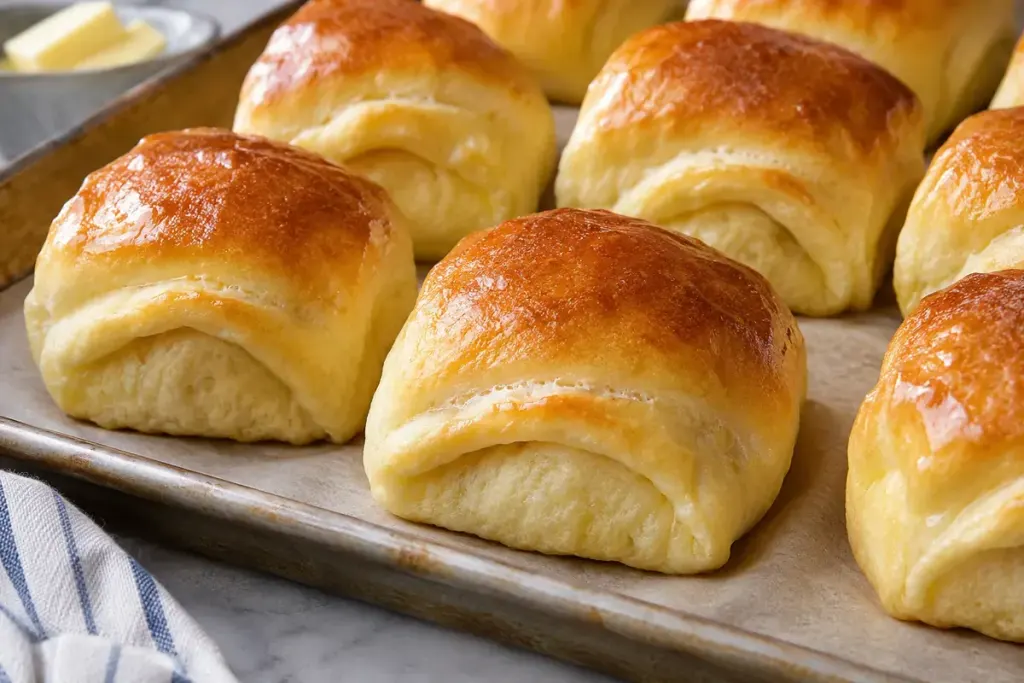
Pull apart a Parker House roll and the fold is part of the pleasure. Its tender bread opens along a buttery seam, giving the roll a different character from a plain round bun. That shape is worth planning before the dough becomes puffy and difficult to handle.
King Arthur Baking’s Parker House recipe uses an enriched dough and a rectangular folding method. Its notes also describe the older approach of folding buttered circles. These are two shaping routes to the same recognisable idea, rather than a reason to force every recipe into identical dimensions.
Keep the fold deliberate
Use the dough and pan size specified by the recipe you have chosen. Pat or roll the rested dough evenly, brush on the prescribed butter, and make the fold without stretching one end far more than the other. A dough scraper is useful for portioning because it cuts without dragging the sheet across the worktop.
Consider a tray with one thick roll between several thin ones. The oven cannot correct those different starting points. Before proofing, compare the pieces and adjust their arrangement while they are still easy to move. The goal is an even batch, not a ruler-perfect display.
Keep track of which side the recipe asks you to place upward. A folded piece can look plausible in more than one orientation, but the placement affects how it opens. Photographing the first correctly shaped piece can be a useful reminder when working through the remaining dough.
Finish by judging the bread
Proof according to the chosen formula and the dough’s appearance; a cold kitchen can change the wait. After baking, let the crust set enough to handle before pulling the rolls apart. For a smaller household, King Arthur’s six-roll version provides a tested smaller formula. Keep each recipe’s ingredients and method together rather than combining its shaping photographs with another dough’s timing.