
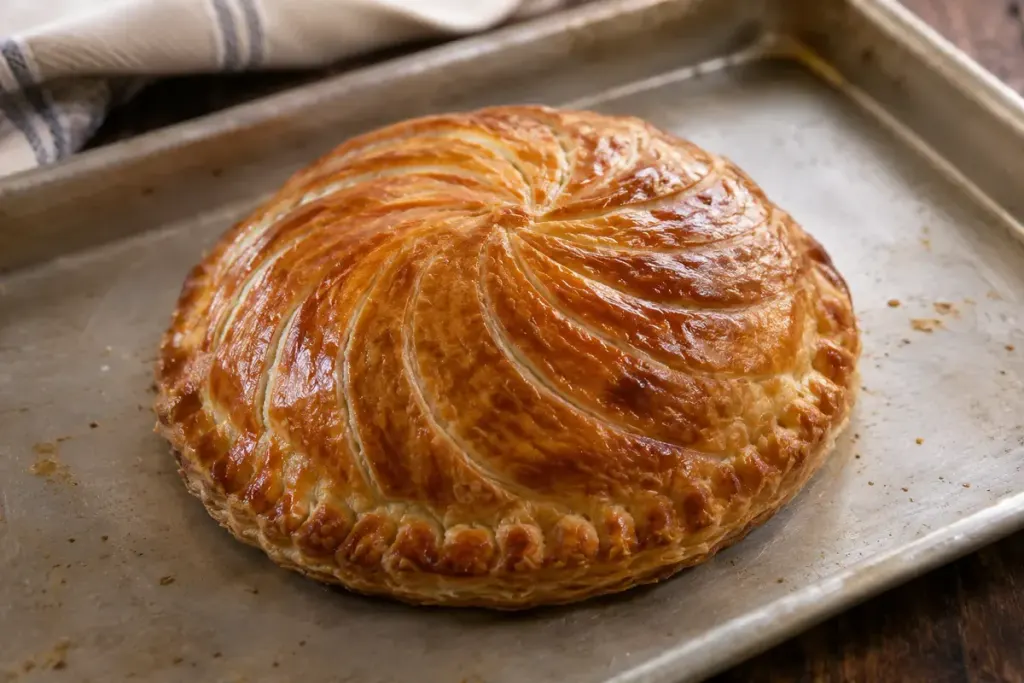
A pithivier looks elaborate when its curved score lines open in the oven, but the assembly has a simple starting point: a filling enclosed between two circles of puff pastry. The challenge is giving the filling enough room while keeping the edge clean enough to seal.
Le Cordon Bleu describes the classic round, enclosed pastry and its two-disc construction. Sweet almond versions are familiar, although the name is also used for savoury preparations. Choose a complete recipe before cutting the pastry; a filling that behaves well in one version may be too wet or bulky in another.
Think about the cross-section before the decoration
The upper disc has to travel over the mound of filling, so it needs more coverage than a flat lid traced directly from the base. In Good Food’s apricot version, the top circle is cut slightly larger and the filling leaves a clear border. Its curved surface marks are scored without slicing through the pastry.
A useful rehearsal is to picture three separate areas: the central filling, the clean joining strip and the outside edge. If the filling spreads across the joining strip, stop and correct that before adding the lid. Pressing harder later is a poor substitute for a clean seam.
A short assembly check
- Have the tray ready before building the pastry, so the filled base does not need an awkward transfer.
- Keep the recipe beside you when deciding how much filling belongs inside; leftover filling is preferable to forcing the lid over a larger mound.
- Apply the specified wash carefully, then make shallow decorative marks with controlled pressure.
- Include the recipe’s chilling step in your schedule rather than treating it as spare time.
For a first attempt, a clear dome and sound seal are more useful goals than a complicated pattern. Photograph the unbaked shape and the finished cross-section for your own notes. If the next bake needs adjustment, those two views help separate an assembly problem from a change in filling or oven behaviour.