
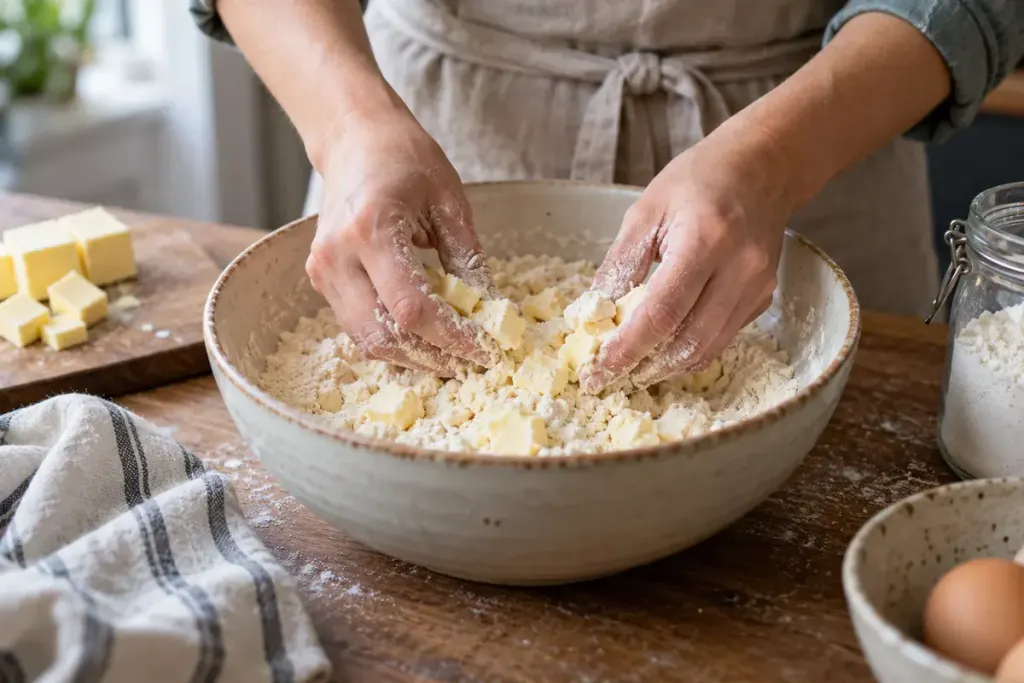
At first the bowl contains flour and obvious cubes of butter. A few minutes later it should contain a flour-coated mixture with the texture your recipe describes. It should not automatically become a smooth paste.
Rubbing in is different from creaming softened butter with sugar. Your fingertips break and distribute the fat through the dry ingredients. The target might be fine crumbs or a mixture that retains larger pieces; those instructions are deliberate, so read them before starting.
Look at the pieces, not the clock
King Arthur Baking’s biscuit guide describes working butter into flour to a crumbly consistency. That is a useful reference for the method, not a universal instruction to make every pastry mixture identical.
Cut the butter as directed and coat it with flour. Work small portions between your fingertips, lifting and releasing them into the bowl. Turn the bowl occasionally so a hidden pocket of large cubes does not remain at the bottom.
Stop periodically and compare a small handful with the recipe’s description. If some pieces need more work, deal with those rather than repeatedly squeezing the whole mixture. A pastry blender is another option if your hands warm the butter quickly.
When the bowl starts feeling greasy
Warm butter can smear rather than break into separate flour-coated pieces. If that starts happening, pause and chill the mixture as the recipe permits. Adding an unmeasured handful of flour may hide the stickiness while changing the ingredient ratio.
Do not add the liquid until you have reached the intended texture. Once liquid is introduced, the task changes: follow the recipe’s mixing instructions instead of continuing the rubbing motion.
For a useful practice note, record the starting butter condition, the appearance before liquid and the baked result. That gives you something specific to adjust next time. A successful bowl is not necessarily the most uniform one; it is the one prepared for the pastry or biscuit you are actually making.