
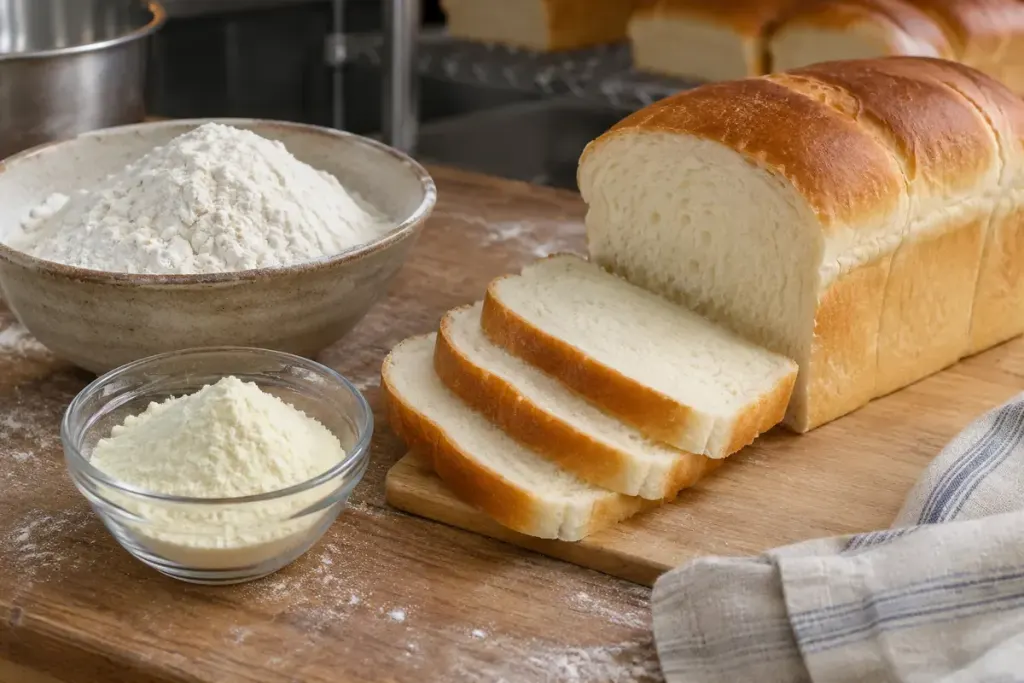
A bread recipe may ask for water and milk powder in the same bowl. It looks like an unnecessarily complicated way to add milk, until you notice that the baker can control the water and milk solids separately. That flexibility is useful in a dough whose consistency already matters.
Milk powder is an ingredient in the dough, rather than flour for the purposes of a baker’s percentage calculation. King Arthur’s explanation of bread hydration points out that dry milk and other added powders can absorb water even though they are not included in the flour total. Two doughs with the same flour-to-water ratio can therefore feel different.
Start with the type the recipe names
Whole-milk powder, nonfat milk powder and a product formulated specifically for bread are not identical ingredients. Their fat content and processing can differ. King Arthur describes its baking milk powder as contributing flavour and tenderness. That product description is a reason to read the recipe’s ingredient notes, rather than a universal instruction to replace every milk powder gram for gram.
If a formula already specifies dry milk, weigh it with the other ingredients. Do not add a full measure of liquid milk as well simply because the dough contains milk powder. The recipe’s water has already been accounted for.
A small comparison teaches more than several substitutions
Try an established milk-bread formula once as written. Record the dough’s feel after mixing, how it handles during shaping, and the cooled crumb. On a later bake, change only the milk-powder choice if the recipe or manufacturer supports that substitution. Keep flour, pan, mixing method and portion size consistent.
For example, a loaf that seems firmer immediately after mixing may soften as the ingredients hydrate. Adding water quickly, then correcting with flour, makes it difficult to understand which change helped. Follow the recipe’s rest and mixing stages before judging the final consistency.
Store the powder according to its packaging and keep the scoop dry. It remains a dairy ingredient, so label bread accurately when sharing it. A useful baking note names the actual powder and its weight; “added some milk” leaves too much of the next loaf to guesswork.