
A tray comes out with pale biscuits at the front and dark edges at the back. It is tempting to blame the dough. But a pattern tied to position deserves a different question: what is happening inside the oven?
The number on the control panel describes a setting. It does not promise identical heat around every pan or at every moment. Before rewriting a recipe, make one ordinary bake easier to interpret.
Give the comparison a fair starting point
Choose a recipe you have made before. Record the oven mode, rack position, pan material, amount of batter and actual preheating routine. “Same recipe” is not a controlled comparison if one batch used a dark metal tin and the next used glass.
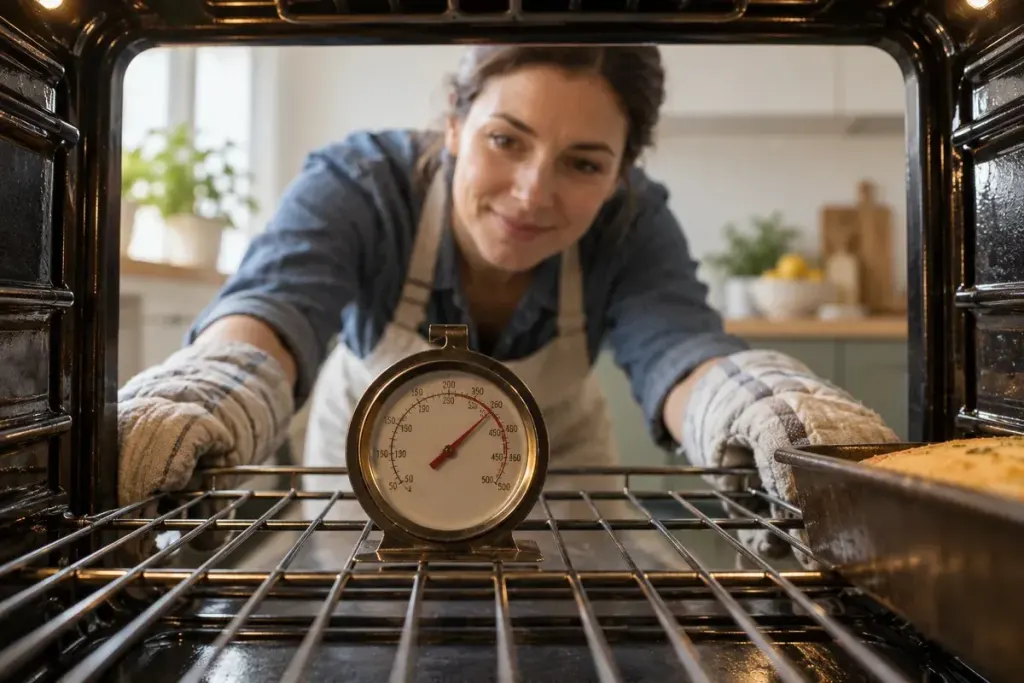
An oven-safe thermometer can provide another observation. Position and read it according to its instructions without touching hot surfaces. Observe after the oven has had time to stabilise; a single reading during a heating cycle is not enough to diagnose a fault.
Separate a general temperature problem from a hot corner
King Arthur Baking’s hot-spot guide uses bread browning to show how different areas behave. Its discussion also explains why positioning and rotation can matter. Treat such a test as a map of relative browning under those conditions, rather than a laboratory calibration.
For your regular bake, draw a rectangle in a notebook and mark which pieces coloured first. Repeat with the same pan orientation next time. If the dark corner moves when the pan turns, examine the pan; if it stays in the same oven position, that is a useful clue about the appliance.
Change one thing you can name
Try a more central rack or a less crowded arrangement before simultaneously lowering the temperature, adding liquid and shortening the bake. Leave space for circulation as the appliance manual recommends. Rotate only when appropriate for the recipe; moving a delicate cake before its structure sets can create another problem.
Keep the result specific: “Back row browned earlier; centre rack and one tray improved consistency” is more helpful than “oven runs strange.” Use the recipe’s doneness checks alongside time, rather than waiting for every edge to match.
If temperatures remain substantially inconsistent or the appliance behaves unusually, consult its manual and a qualified service provider. A baking log can make that conversation more useful—and prevent a good recipe from taking the blame for an equipment problem.