
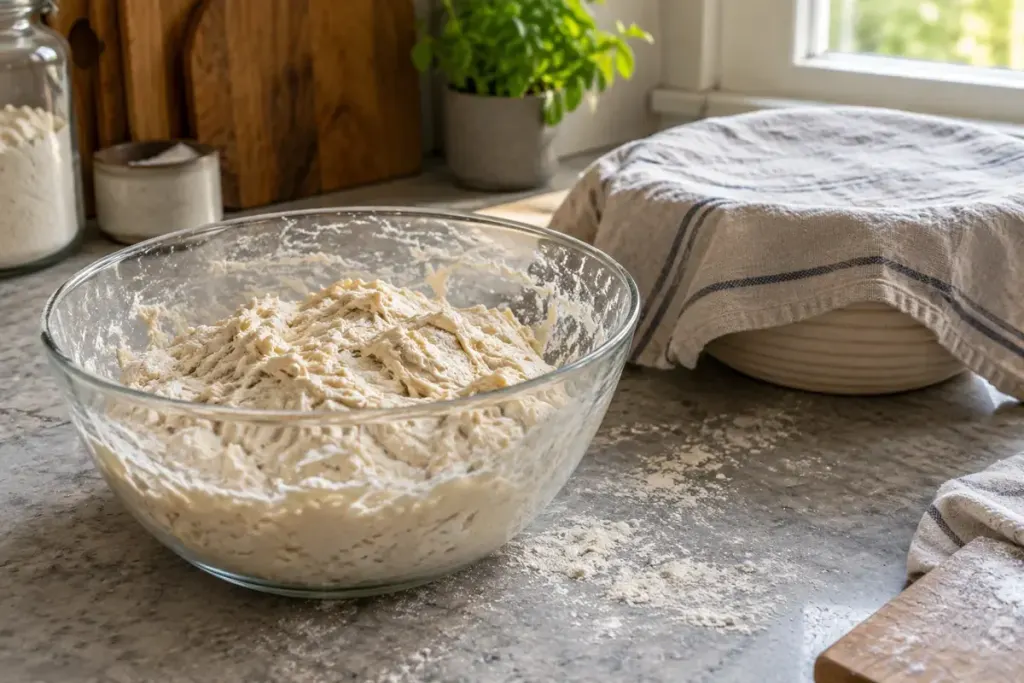
The first bowl of flour and water can look rough enough to need immediate kneading. In a recipe that uses an autolyse, that rough mixture is deliberately left alone for a while. The pause gives the flour time to hydrate before the next stage.
King Arthur Baking’s explanation of autolyse describes the flour-and-water rest and its effect on dough handling. Recipes sometimes adapt the method, so check exactly which ingredients the author includes rather than assuming every pause has the same purpose.
Place the rest on the clock
Read the complete formula first. If it specifies flour and water only, hold back the salt, starter or yeast until instructed. Mixing everything and leaving it for the same interval changes the process: fermentation may already be underway.
Cover the bowl so the surface does not dry out. Set a timer for the recipe’s stated rest and prepare the next ingredients while you wait. A timer is especially useful when several doughs share the kitchen; an intended short pause can otherwise become an unplanned delay.
Notice handling, not just appearance
After the rest, compare how the dough gathers and stretches with how it behaved immediately after mixing. Flour type, water quantity and temperature affect the result. A wetter dough may remain sticky even when hydration has progressed.
For a useful home experiment, repeat one trusted recipe with the same flour and measurements. Record the stated rest, room conditions and how difficult it was to incorporate the remaining ingredients. Do not simultaneously change the hydration, starter quantity and kneading method, because you will lose track of what caused the difference.
An autolyse is an option within a bread-making method, not an extra rest every recipe needs. When following a well-tested formula, its own sequence is the best starting point. Judge the method by whether it helps you make that dough consistently, rather than by the sophistication of the name.