
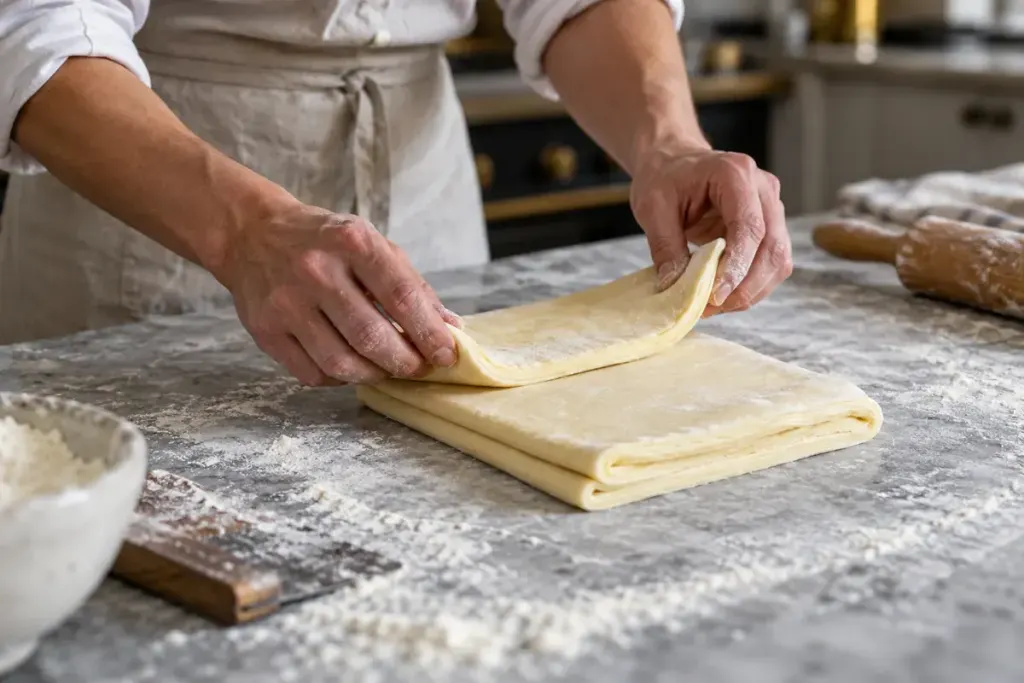
A neat stack of folded dough is satisfying to make. Yet neatness alone does not create flaky pastry: the butter must remain in distinct layers rather than disappear into the dough. A letter fold is one stage of that process, not a shortcut around temperature and handling.
In its classic puff-pastry method, King Arthur Baking rolls the dough into a rectangle, folds it in thirds and turns the packet before the next roll. The recipe also builds in chilling and checks for dough that has become warm or resistant. Follow the schedule of the recipe you are using; croissants, rough puff and classic puff do not necessarily call for the same sequence.
Read the packet before the next roll
Look at the corners and edges. A roughly rectangular packet is easier to roll evenly than a bundle with one thick corner and one tapered end. Brush away loose excess flour before folding so that the surfaces can meet cleanly.
Now notice resistance. If the dough repeatedly springs back, pressing harder is unlikely to make the next stage more controlled. Cover and rest it as the recipe directs. If butter is becoming greasy or escaping, pause and chill rather than trying to hide the problem beneath a heavy layer of flour.
A small record prevents a surprisingly common mistake
Write the completed turn number on a separate note. After a phone call or a refrigerator break, “I think that was the third fold” is an unreliable starting point. Keep the note away from the food and record a turn only after completing it.
Use one practice batch to observe the relationship between handling and the baked result. Photograph the unbaked edge, note rests and compare the finished layers after cooling. The purpose is not to chase the highest possible layer count. It is to make the recipe’s intended layers consistently enough that you can understand what changed between bakes.